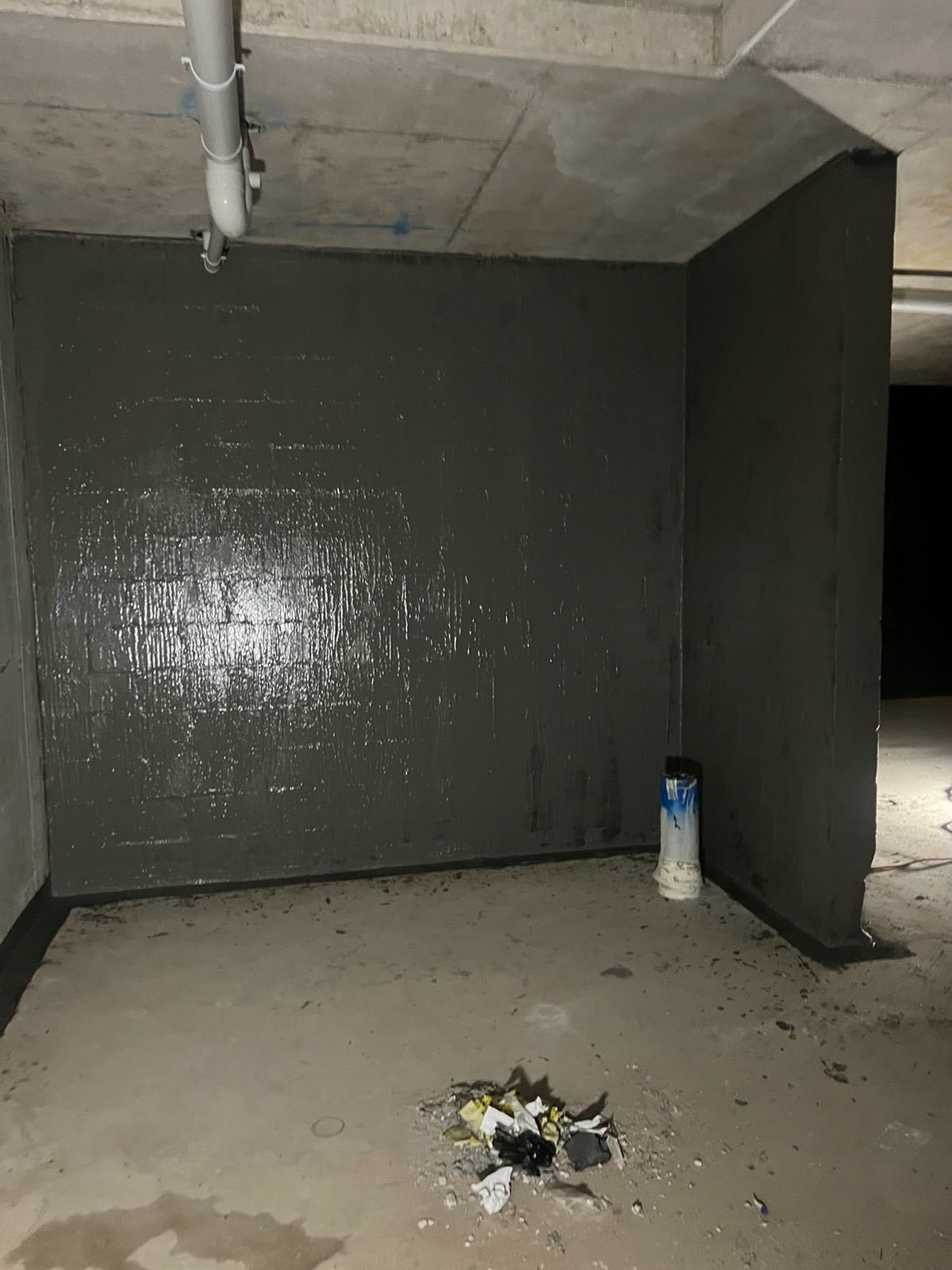
If you’ve read our pages on retaining wall & planter box waterproofing or car park waterproofing, you’ll have seen us mention "positive side" and "negative side" waterproofing. It’s a distinction that decides which membrane system goes on a job — and getting it wrong is one of the most common reasons waterproofing fails within a few years instead of lasting decades.
What do "positive side" and "negative side" actually mean?
- Positive side waterproofing means the membrane is applied on the same side the water comes from. Think of a podium deck, balcony, planter box top, or a car park’s top-level trafficable surface — water sits directly on the treated surface before it can get anywhere near the structure underneath.
- Negative side waterproofing means the membrane is applied on the opposite side to where the water pressure originates. This is common below ground — a basement car park wall or the habitable side of a retaining wall, where groundwater or wet soil is pushing in from the outside, but access to the "wet side" isn’t possible or practical.
Choosing the wrong one — or using a product that isn’t rated for the direction of pressure involved — is how you end up with efflorescence, spalling concrete, or a wall that looks fine for two years and then starts staining and cracking.
Mapelastic Smart — built for positive side, high-movement surfaces
On projects like our car park waterproofing work, particularly suspended slabs, podium decks, and trafficable surfaces exposed directly to rain, vehicle traffic and temperature swings, we look at flexible, crack-bridging cementitious systems suited to the positive side. Mapei’s Mapelastic Smart is a two-component, high-flexibility cementitious mortar with crack-bridging greater than 2mm, applied by trowel or roller — designed for exactly this kind of exposed, positive-side application (balconies, terraces, bathrooms, and podium-style surfaces) (Mapei Australia).
Why it suits positive side work:
- Membrane sits directly on the exposed surface, taking the full brunt of water, UV, and thermal movement
- High crack-bridging capacity handles the natural movement of suspended slabs and podium decks
- Roller/trowel application allows careful detailing around drains, columns, and service penetrations — the kind of detailing you can see in our basement car park projects below
Recent project: basement car park membrane detailing
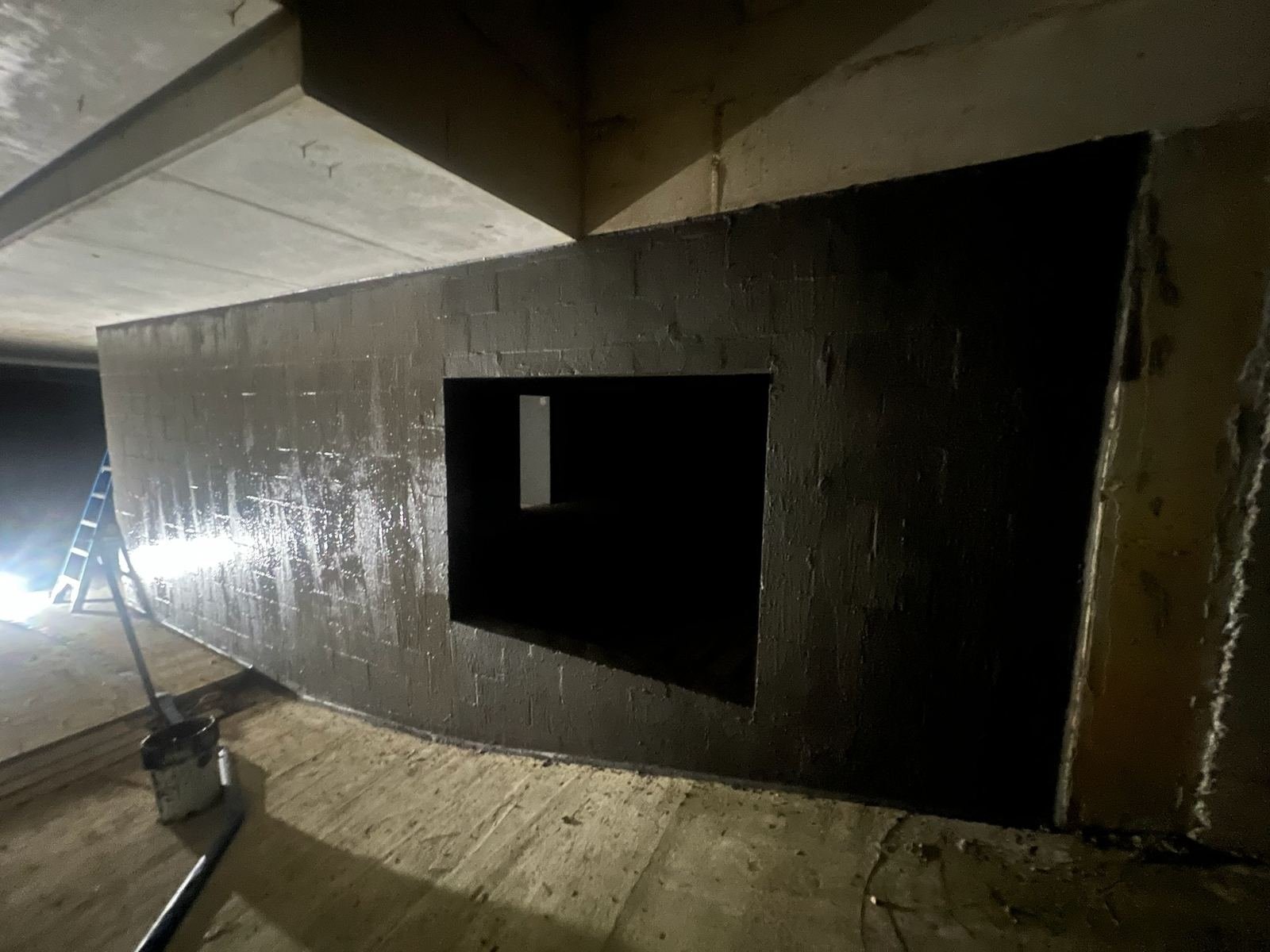
Membrane detailing wrapped around a structural column and service opening — a common failure point if not treated correctly.
Full project scope and system options are on our car park waterproofing page.
Mapelastic Foundation — rated for negative and positive hydraulic lift, our go-to for below-ground structures
Mapelastic Foundation is a two-component, flexible cementitious mortar specifically rated for waterproofing concrete and masonry subject to both negative and positive hydraulic lift (Mapei Australia). That dual rating is exactly why we specify it on retaining wall and planter box projects — retaining walls almost always involve some negative-side water pressure from backfill and soil moisture pushing against the structure from outside, often with limited access to treat the "wet side" directly.
Why it suits negative side work:
- Rated for hydraulic lift from either direction, so it holds up even when soil-side access isn’t possible
- Thixotropic, flexible mortar that tolerates minor substrate movement without cracking
- Pairs with drainage board and protection board installation to relieve hydrostatic pressure and shield the membrane during backfill — both services we carry out as part of the same job
How we decide which system goes where
Every retaining wall, planter box, or car park structure gets assessed on-site before we specify a system. The questions we’re answering:
- Which side of the structure is the water actually coming from, and can we access it?
- How much movement will the structure see (thermal, structural, vehicle load)?
- Is the surface trafficable, planted, or hidden below finishes?
- What’s going on top afterward — stone cladding, capping, paving, or tiling?
That last point matters because, as a business doing waterproofing, stonemasonry and tiling under one roof, we plan the membrane and the finish as one system rather than two separate trades handing off blind — which is also why we install drainage boards, protection boards and crack repairs as standard prep work, not an afterthought.
The takeaway
If you’re a builder, landscaper, or homeowner comparing quotes and someone mentions "Mapelastic Smart" versus "Mapelastic Foundation," it’s not just brand preference — it reflects which side of the structure the water is coming from and how much movement the surface needs to tolerate. Get the direction wrong and even a quality product will underperform.
For a site-specific recommendation, see our retaining wall & planter box waterproofing and car park waterproofing pages, or get in touch for a free assessment.
Not Sure Which System Your Project Needs?
TN Stone assesses retaining walls, planter boxes and car park structures on-site and specifies the right membrane system for the direction of water pressure involved.
Get a Free Assessment