Best Grout Colour for Bathrooms and Kitchens
Grout colour has a bigger impact on the finished look of a bathroom or kitchen than most people expect. The same tile can look completely different depending on whether it is paired with a matching grout, a contrasting grout, or something in between. Grout colour also affects how easily stains and grime show up over time, which matters just as much as the visual style. This guide walks through how to choose the best grout colour for your bathroom or kitchen in an Australian home.
Key takeaways
- Light grout creates a seamless, spacious look but shows dirt and staining more easily over time.
- Dark grout hides grime better and creates a bolder, more defined tile pattern, but can highlight efflorescence or lime scale in some tiles.
- Matching grout (close to the tile colour) gives a clean, uniform look and is a safe, timeless choice for resale value.
- Contrasting grout makes a feature of the tile pattern and grid lines, which suits more deliberate, design-led spaces.
- In wet areas, colour should be a secondary consideration to grout type — epoxy or a quality sealed cement grout matters more than colour for long-term performance.
Does grout colour actually matter?
Yes, in more ways than most homeowners realise. Grout colour affects three main things: the overall visual style of the room, how noticeable staining and grime will be over time, and how much the grout lines stand out against the tile itself. A well-chosen grout colour can make a small bathroom feel larger, make a feature tile stand out, or help hide the realities of daily use in a busy kitchen or family bathroom.
Light grout vs dark grout vs matching grout

| Grout colour approach | Visual effect | Practical considerations |
|---|---|---|
| Light or white grout | Bright, seamless, spacious feel; softens the grid pattern | Shows staining, mould and grime more easily; needs more regular cleaning and sealing |
| Dark or charcoal grout | Bold, defined tile pattern; strong contrast with light tiles | Hides day-to-day grime well; can show efflorescence or scale marks on some tiles |
| Grey/mid-tone grout | Balanced, practical middle ground | Good all-rounder for busy households; forgiving of both stains and mineral marks |
| Matching grout | Seamless, minimal, understated look | Timeless and safe for resale; small grout imperfections are less noticeable |
| Contrasting grout | Feature grid pattern; more graphic, deliberate style | Draws attention to tile layout precision; less forgiving of uneven grout lines |
Choosing grout colour for bathrooms
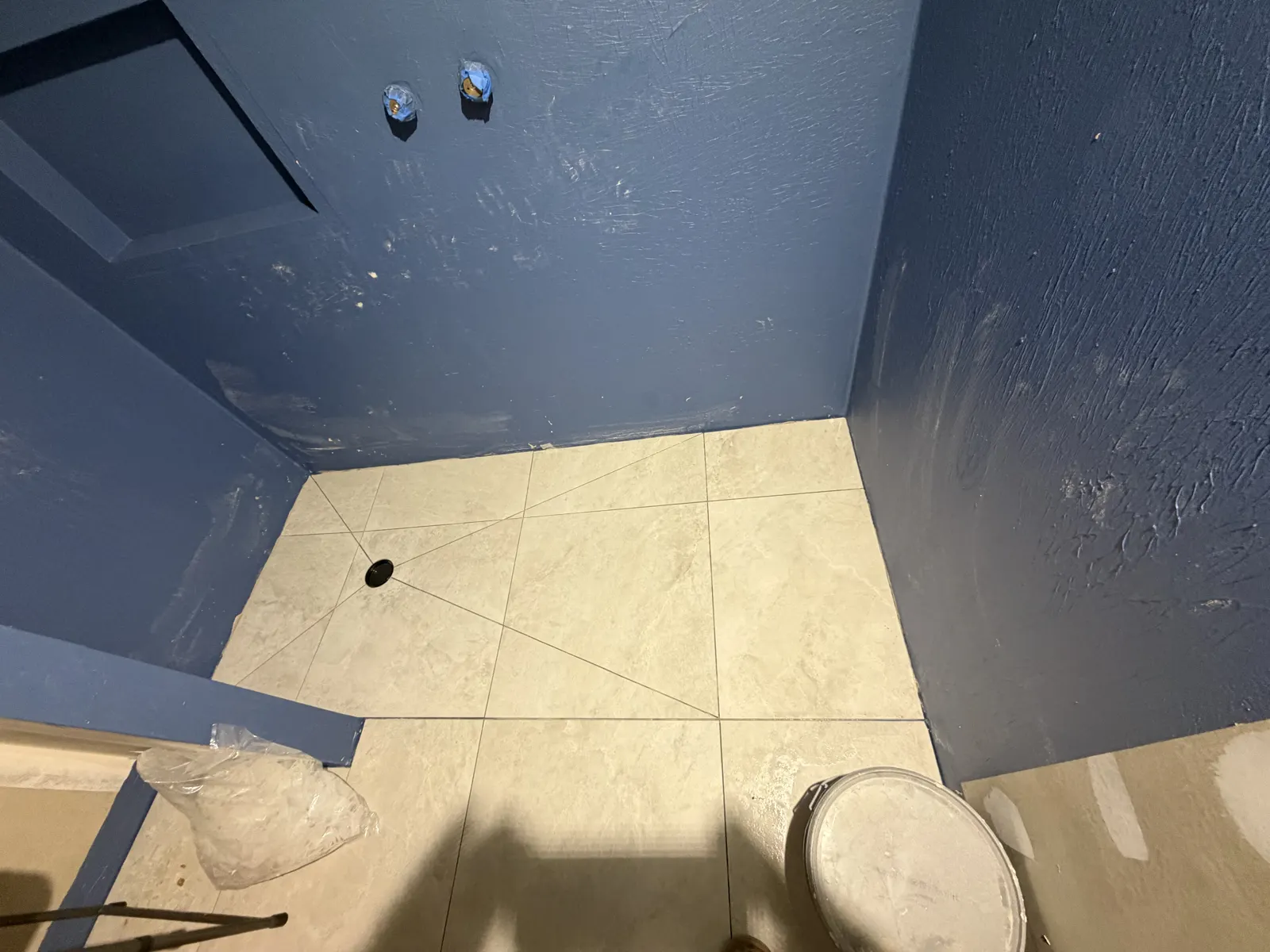
Showers and wet walls
In showers, mid-tone or darker grout is often the more practical choice because it is less likely to show soap scum, mineral deposits and general grime between cleans. If you prefer a light, bright shower look, light grout can still work well, but plan on more frequent cleaning and a good quality seal (for cement grout) or epoxy grout to manage staining.
Bathroom floors
Bathroom floors take more foot traffic and general grime than walls, so a mid-tone or darker grout tends to hide day-to-day marks better. Light grout on a bathroom floor looks striking when new but can look tired faster in high-use family bathrooms.
Feature walls and niches
For feature tiles, mosaic strips or a statement shower niche, contrasting grout can help the tile pattern stand out. If the tile itself is already a feature (such as a patterned or textured tile), matching grout is often better so the grout lines do not compete with the tile design.
Choosing grout colour for kitchens
Kitchen splashbacks
Splashbacks are a visual feature in most kitchens, so grout colour choice often comes down to style. Matching grout keeps a clean, seamless look behind the cooktop and sink, while contrasting grout can highlight a herringbone or brick-pattern tile layout.
Kitchen floors
Kitchen floors deal with spills, foot traffic and dropped food, so a mid-tone or darker grout generally performs better day to day than a very light colour. This is one of the few areas where practicality often outweighs the visual preference for a bright, light grout line.
Pros and cons of light grout
Advantages
- Bright, spacious feel: Works well in small bathrooms or kitchens.
- Softens the grid pattern: Creates a more seamless, calm look across the tiled surface.
- Suits Scandinavian, coastal and minimalist styles: A popular choice in many current Australian renovations.
Disadvantages
- Shows staining more easily: Especially in showers, splashbacks and floors.
- Needs more frequent cleaning and sealing: To keep its appearance over time.
- Can look dated faster in high-use areas: If maintenance slips.
Pros and cons of dark grout
Advantages
- Hides everyday grime well: A practical choice for busy households and high-traffic floors.
- Creates a bold, defined look: Popular in contemporary bathroom and kitchen designs.
- Forgiving between cleans: Less noticeable build-up compared with light grout.
Disadvantages
- Can show efflorescence or lime scale: On some tiles, mineral marks can stand out more against dark grout.
- Less forgiving of grout smearing or haze: During and shortly after installation.
- May feel heavier in small spaces: If overused across floor and walls together.
Does grout colour affect maintenance?
Colour affects how visible dirt and staining are, but it does not change how porous the grout itself is. A light cement grout and a dark cement grout will absorb moisture and stains at a similar rate — the difference is how noticeable that staining becomes. If low maintenance matters more than colour, the bigger decision is often grout type rather than shade. For a full comparison of how grout types perform in wet areas, see Epoxy vs Cement Grout.
Tips for choosing the right grout colour
- Test a sample before committing: Grout can look different once it cures and dries compared with the wet sample in the tub.
- Consider the room's use, not just the style: A family bathroom or busy kitchen floor may benefit from a more forgiving mid-tone grout.
- Think about long-term maintenance: Light grout looks great initially but needs more consistent cleaning and sealing to stay that way.
- Match grout to the tile's undertone: Warm-toned tiles generally pair better with warm greys or off-whites, while cool-toned tiles suit cooler greys.
- Ask your tiler for a sample board: Seeing the grout and tile together under your room's actual lighting is the most reliable way to choose.
Grout colour advice for homes in Melbourne's west
TN Stone works on bathroom and kitchen tiling projects across Melbourne's western suburbs, including Brookfield, Werribee, Caroline Springs, Footscray and surrounding areas, where new-build homes and established properties often call for quite different grout colour strategies. Newer homes in growth areas like Caroline Springs and Werribee often suit lighter, seamless grout to match contemporary tile trends, while older homes being renovated in Footscray and surrounding suburbs sometimes benefit from a mid-tone or darker grout that is more forgiving of variations in older tile surfaces.
When to call a professional
Choosing a grout colour is partly a style decision, but it is worth getting trade advice before committing, especially for wet areas where the wrong combination of tile, grout type and colour can lead to more visible staining or maintenance issues down the track. A tiler can also advise on how a colour sample will look once cured, which is easy to get wrong from a small display board.
TN Stone provides tiling and grouting services across Melbourne and the western suburbs, including Brookfield, Werribee, Caroline Springs, Footscray and surrounding areas. If you would like advice on the best grout colour for your bathroom or kitchen renovation, contact TN Stone for advice or a quote.
Need help choosing the right grout colour for your bathroom or kitchen? Get a free, no-obligation quote from TN Stone.
Request a Free QuoteFrequently asked questions
Is light or dark grout better for a bathroom?
It depends on priorities. Light grout gives a brighter, more seamless look but shows staining more easily, while dark grout hides everyday grime better but can highlight mineral marks on some tiles.
What grout colour hides dirt best?
Mid-tone greys and darker charcoal shades generally hide everyday dirt and grime better than white or very light grout colours.
Should grout match the tile colour?
Matching grout gives a clean, seamless look and is a safe, timeless choice, particularly if you want the tile itself to be the visual focus rather than the grid pattern.
Does grout colour affect how often I need to clean it?
Grout colour does not change how porous the grout is, but light grout shows staining sooner, which often means it needs cleaning more frequently to keep the same appearance as a darker grout.
Can I change my grout colour without retiling?
In some cases, grout colourants or tinted grout sealers can adjust the appearance of existing grout, but for a genuine colour change, most professionals will recommend removing the old grout and regrouting rather than relying on a surface colourant alone.