When to Regrout vs Retile a Bathroom
A tired-looking bathroom does not always need a full retile. In many cases, regrouting can restore a shower or bathroom's appearance and waterproofing performance for a fraction of the cost. In other cases, regrouting is only a short-term fix and a full retile is the more sensible long-term decision. This guide explains how to tell the difference, what each option involves, and how to decide which is right for your bathroom.
Key takeaways
- Regrouting is usually enough if the tiles themselves are sound and the problems are limited to cracked, crumbling or discoloured grout.
- Retiling becomes the better option when there is water damage behind the tiles, widespread cracked tiles, or a failed waterproofing membrane.
- Persistent mould, a spongy or moving floor, or musty smells are signs the problem goes deeper than the grout.
- Regrouting is far cheaper and faster, but it cannot fix underlying leaks or waterproofing failures.
- A professional inspection is the safest way to confirm whether you are dealing with a cosmetic issue or a structural one.
What is the difference between regrouting and retiling?
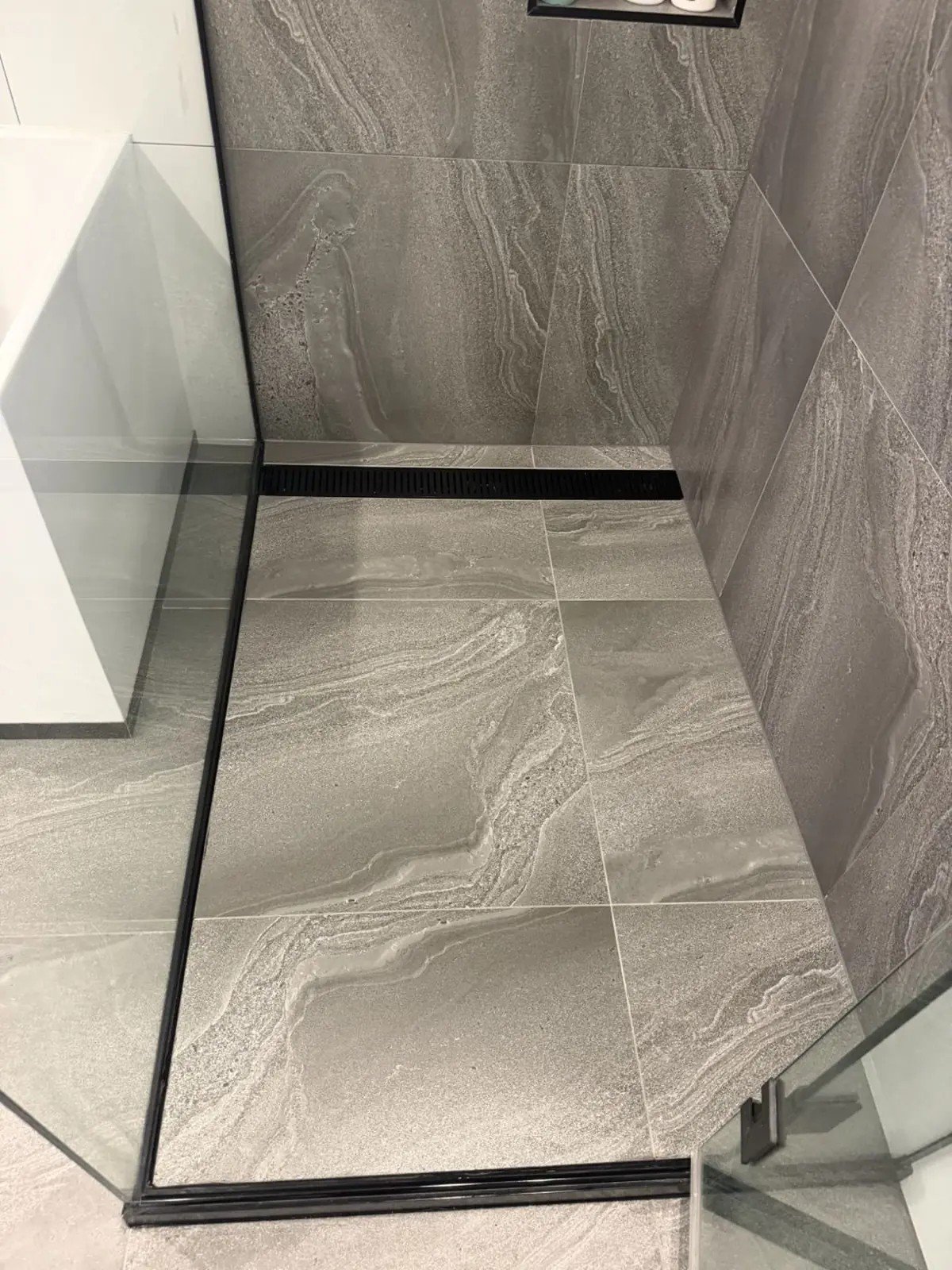
What does regrouting involve?
Regrouting means removing the old, damaged grout from between the tiles and replacing it with fresh grout. The tiles themselves stay in place. It is a surface-level repair that addresses grout that has cracked, crumbled, discoloured or lost its seal, without disturbing the tiles or the waterproofing layer underneath.
Regrouting is a relatively quick job in most bathrooms and is often completed within a day, depending on the size of the area and how much old grout needs to be removed first.
What does retiling involve?
Retiling means removing the existing tiles completely, and usually the substrate and waterproofing membrane underneath as well, before installing new tiles from scratch. This is a much bigger job that typically involves demolition, waterproofing, tiling and grouting stages, and it is the appropriate response when the problem is not just cosmetic.
Retiling gives you the chance to fix any underlying waterproofing issues, replace damaged substrate, and update the layout, tile size or finish at the same time.
Regrout vs retile at a glance
| Factor | Regrouting | Retiling |
|---|---|---|
| Typical cost | Lower; a surface-level repair | Higher; involves demolition and rebuilding |
| Typical timeframe | Often completed in a day or two | Can take several days to a couple of weeks |
| Fixes waterproofing issues | No | Yes, if the membrane is replaced |
| Fixes cracked or loose tiles | No | Yes |
| Changes tile look, size or layout | No | Yes, if desired |
| Best for | Cosmetic grout problems on otherwise sound tiling | Water damage, failed waterproofing, widespread tile damage |
Signs that regrouting is enough
- The tiles themselves are firmly fixed: No hollow sounds, movement or cracked tiles.
- Grout is cracked, crumbling or discoloured: But the problem does not extend beyond the grout lines.
- Mould is limited to the grout surface: And clears up with proper cleaning rather than returning immediately.
- There is no sign of water damage nearby: No damp smells, staining on adjoining walls, or damage to skirting and flooring outside the wet area.
- The bathroom is otherwise in good condition: You are happy with the existing tiles, layout and waterproofing, and just want to refresh the finish.
Signs that you need a full retile
- Tiles sound hollow when tapped: This usually means the adhesive bond has failed and the tile is no longer secure.
- Cracked or loose tiles in multiple spots: Especially where cracking keeps returning after repairs.
- Water stains or damage outside the wet area: Such as on the bathroom floor near the shower, in an adjoining room, or on a ceiling below the bathroom.
- Musty or damp smells that persist: Even after cleaning and reasonable ventilation.
- A floor that feels soft, spongy or uneven: This can indicate substrate damage from long-term water ingress.
- The waterproofing membrane is old, damaged or was never installed correctly: Especially common in older Australian homes renovated before current waterproofing standards.
- Grout keeps failing shortly after regrouting: Repeated grout failure in the same spots often points to a movement or waterproofing issue, not a grouting problem.
Why regrouting cannot fix a waterproofing problem
Grout sits on the surface of the tiled area. It is not the primary barrier that keeps water out of the walls and floor structure behind your tiles — that job belongs to the waterproofing membrane installed underneath. If water has already found its way behind the tiles because the membrane has failed or was never installed to the right standard, fresh grout on the surface will not stop the problem. It may look better for a while, but the underlying leak will usually continue.
This is why an inspection matters before committing to either option. A tiler or waterproofer can check whether moisture has reached the substrate, assess the condition of the membrane where accessible, and confirm whether a surface repair will genuinely solve the issue.
Cost considerations
Regrouting a bathroom is almost always the cheaper option because it does not involve demolition, waterproofing or new tile and adhesive costs. It is a sensible choice when the existing tiling is structurally sound and the goal is simply to refresh the grout lines and restore water resistance to the surface.
Retiling costs more because it involves stripping out the old tiles and substrate, replacing or repairing the waterproofing membrane, and installing new tiles and grout. While the upfront cost is higher, it is usually the more cost-effective option in the long run when there is genuine water damage, because patch repairs on a failing membrane tend to need repeating.
Can you regrout as a temporary measure before retiling?
Sometimes, yes — but with caution. If you know a full renovation is planned for the near future and the current issue is purely cosmetic, a regrout can buy time without wasting money on a job that will be removed later. However, if there are already signs of water damage or membrane failure, regrouting as a stop-gap can mask a problem that is quietly getting worse, which may increase the extent (and cost) of the eventual retile.
Regrouting and retiling in Melbourne's west
Older homes across Melbourne's western suburbs, including Brookfield, Werribee, Caroline Springs and Footscray, often have bathrooms built or last renovated before current Australian waterproofing standards were introduced. Combined with our climate's shifts between dry and wet periods, this makes it common to see grout and silicone deteriorate faster than the tiles themselves — but it also means waterproofing issues can be more common in older bathrooms than homeowners expect. Getting a proper assessment before choosing between regrouting and retiling is especially worthwhile in these older homes.
When to call a professional
If you are unsure whether your bathroom needs regrouting or a full retile, it is worth getting a professional opinion before spending money on either option. A tiler can check for hollow tiles, assess grout and silicone condition, and look for signs of water damage that are not obvious from a quick look. This is especially important if you have already noticed water stains, musty smells, or grout that keeps failing in the same area.
TN Stone provides tiling, regrouting and waterproofing-related services across Melbourne and the western suburbs, including Brookfield, Werribee, Caroline Springs, Footscray and surrounding areas. If you are weighing up regrouting against a full retile, contact TN Stone for an assessment or a quote.
Not sure whether your bathroom needs regrouting or a full retile? Get a free, no-obligation assessment from TN Stone.
Request a Free QuoteFrequently asked questions
How do I know if my bathroom just needs regrouting?
If the tiles are firmly fixed, there is no water damage nearby, and the problems are limited to cracked or discoloured grout, regrouting is usually enough.
Is retiling always more expensive than regrouting?
Yes, retiling generally costs more upfront because it involves removing tiles, addressing the substrate and waterproofing, and installing new tiles. It can still be the more cost-effective choice long term if there is underlying water damage.
Can regrouting fix mould in the shower?
Regrouting can remove mould that has taken hold in the grout itself, but if mould keeps returning quickly it may point to a ventilation or waterproofing issue that regrouting alone will not solve.
How long does regrouting usually take compared to retiling?
Regrouting is often completed within a day or two, while a full retile can take anywhere from several days to a couple of weeks depending on the size of the bathroom and the extent of any repairs needed.
Should I get a professional opinion before deciding?
Yes. A professional inspection can identify whether tiles are hollow, whether there is hidden water damage, and whether the waterproofing membrane is intact, which are all details that are difficult to assess accurately without trade experience.