Best Tiles for Bathroom Floors
Bathroom floor tiles have to deal with constant moisture, bare feet, and the risk of a slippery surface, which makes them a very different decision from choosing tiles for a splashback or living area floor. The right tile needs to balance water resistance, slip resistance, durability and appearance. This guide compares the most common tile options for Australian bathroom floors, including porcelain, ceramic, natural stone and mosaic tiles, to help you choose the right fit for your renovation.
Key takeaways
- Porcelain tiles are generally the most popular choice for bathroom floors because they are dense, low-porosity and available in slip-resistant finishes.
- Slip resistance matters more than look alone — always check the slip rating (R rating or similar) of a tile intended for a bathroom floor, especially for wet, barefoot areas.
- Natural stone can look stunning in a bathroom but usually needs sealing and more ongoing care than porcelain or ceramic.
- Smaller format tiles and mosaics have more grout lines, which can improve slip resistance underfoot but add more grout to maintain.
- Whatever tile you choose, correct waterproofing and fall to the drain underneath the tiles matters as much as the tile itself.
What matters most when choosing a bathroom floor tile?
Water resistance
Bathroom floors are one of the wettest surfaces in an Australian home, so water absorption is a key factor. Tiles with low porosity resist water absorption, staining and the kind of long-term moisture damage that can occur with more porous materials.
Slip resistance
A wet bathroom floor with bare feet is a genuine safety consideration, particularly for households with young children or older residents. Tiles intended for bathroom floors should have a suitable slip resistance rating, and a textured or matte finish is usually a safer choice underfoot than a highly polished, glossy finish.
Durability and maintenance
Bathroom floors see daily foot traffic and repeated exposure to moisture, cleaning products and, in family bathrooms, plenty of general wear. The tile and grout combination needs to hold up to this over many years without excessive maintenance.
Appearance and feel
Bathroom floor tiles also set the tone for the whole room. Size, colour, pattern and finish all affect how large or small the space feels, and how easy the floor is to keep looking clean between cleans.
Common bathroom floor tile options at a glance
| Tile type | Water resistance | Slip resistance | Maintenance | Typical cost |
|---|---|---|---|---|
| Porcelain | Excellent; very low porosity | Good in matte/textured finishes; check rating | Low; does not need sealing | Moderate |
| Ceramic | Good; slightly more porous than porcelain | Good in matte/textured finishes; check rating | Low; does not need sealing | Lower to moderate |
| Natural stone (e.g. slate, limestone, travertine) | Varies; generally more porous, needs sealing | Often good with honed or textured finishes | Higher; sealing and periodic resealing needed | Higher |
| Mosaic (porcelain, glass or stone chips) | Depends on material used | Very good; more grout lines improve grip | Moderate; more grout to clean and maintain | Moderate to higher |
| Marble | Lower; porous and can etch | Can be slippery when polished; honed finishes help | Higher; sealing, resealing and careful cleaning needed | Higher |
Porcelain tiles for bathroom floors
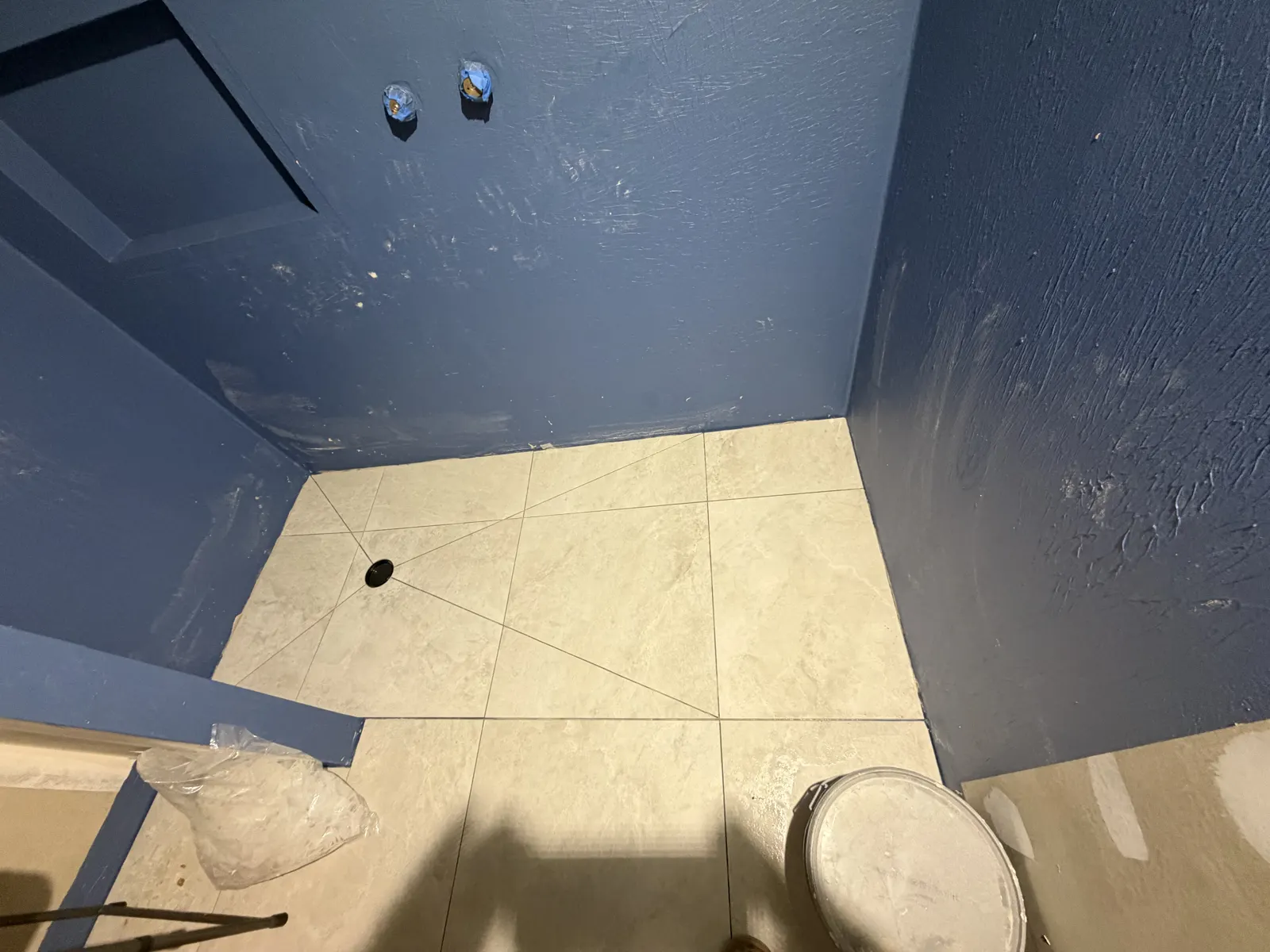
Advantages
- Very low water absorption: Porcelain's dense composition makes it one of the most water-resistant tile options available.
- Wide range of slip-resistant finishes: Matte, textured and structured porcelain finishes are widely available for wet areas.
- Low maintenance: Porcelain does not need sealing and is generally easy to keep clean.
- Large format and stone-look options: Porcelain is available in large formats and finishes that mimic natural stone, marble or timber.
Disadvantages
- Can be harder to cut and install: Porcelain's hardness and density can make installation more demanding, particularly for large-format tiles.
- Polished finishes can be slippery: A glossy porcelain finish is not ideal for a bathroom floor; matte or textured finishes are the safer choice.
Ceramic tiles for bathroom floors
Advantages
- More affordable: Ceramic tiles are generally cheaper than porcelain for a comparable size and finish.
- Easier to cut and install: Ceramic is softer than porcelain, which can make installation more straightforward.
- Wide range of styles: Available in many colours, patterns and finishes suited to bathroom floors.
Disadvantages
- Slightly more porous than porcelain: Ceramic absorbs a little more water, which matters most at cut edges and grout lines if not properly sealed and grouted.
- Less durable under heavy wear: Ceramic can be more prone to chipping than porcelain in high-traffic bathrooms.
For a deeper comparison of these two tile types, see our related guide, Porcelain vs Ceramic Tiles: What's the Difference in Australia?
Natural stone tiles for bathroom floors
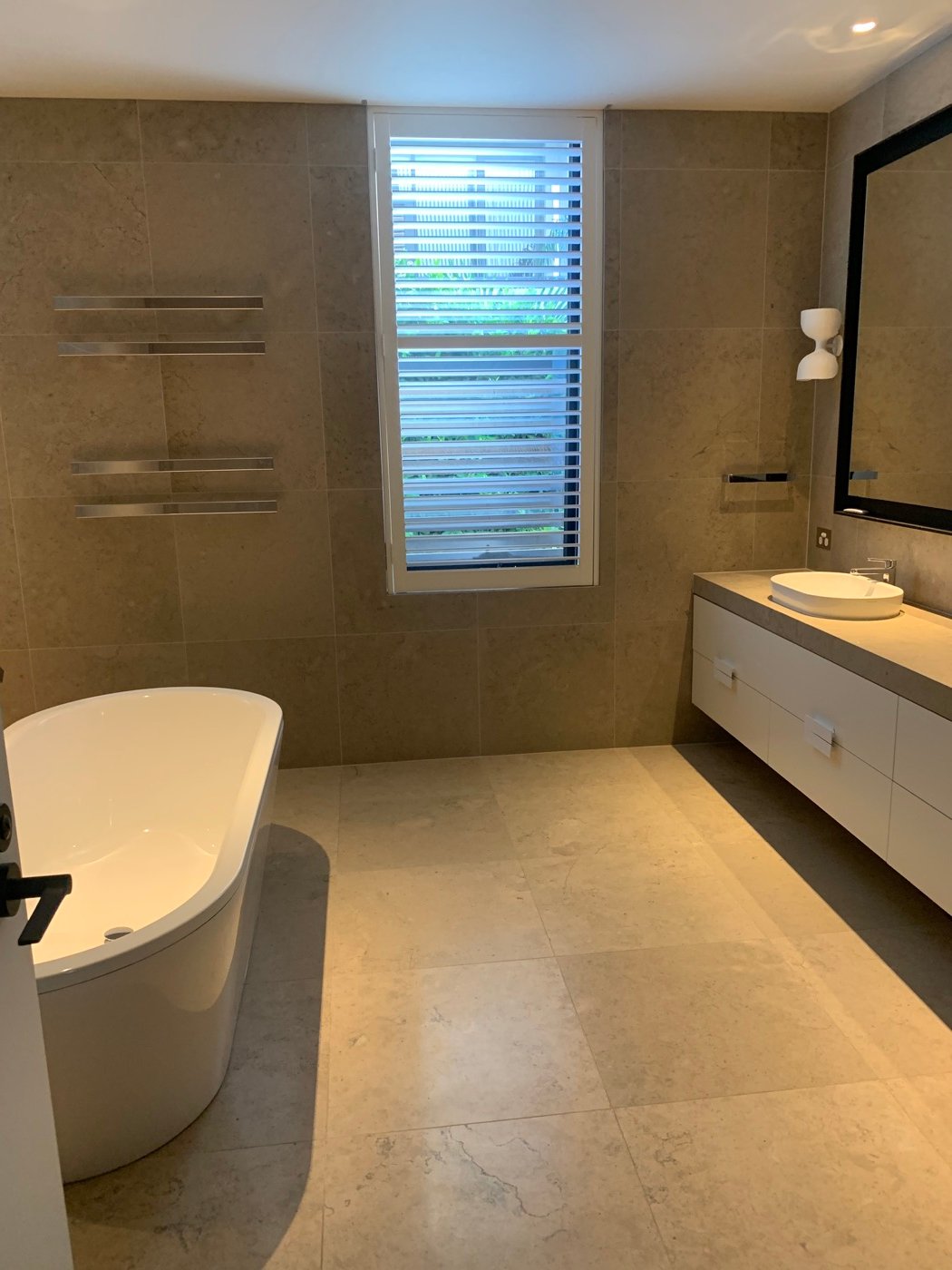
Advantages
- Unique, premium appearance: Natural stone offers a look that manufactured tiles can only approximate.
- Good options for slip resistance: Honed or naturally textured stones, such as certain limestones and slates, can perform well underfoot when wet.
- Cool underfoot: Many natural stones stay cool, which some homeowners prefer in warmer climates.
Disadvantages
- Requires sealing: Most natural stone floor tiles need sealing and periodic resealing to resist staining and moisture absorption.
- More maintenance overall: Cleaning products need to be pH-neutral and stone-safe to avoid damaging the surface or sealer.
- Polished stone can be slippery: A honed or textured finish is generally a safer choice than a high-polish finish for a wet bathroom floor.
- Higher cost: Natural stone typically costs more than porcelain or ceramic, both in materials and installation.
Mosaic tiles for bathroom floors
Mosaic tiles, whether porcelain, glass or natural stone chips, are a popular choice for bathroom floors because their smaller format naturally creates more grout lines. This can improve grip and slip resistance underfoot compared with a large single tile, which is one reason mosaics are often used in showers and around drains where floors need to fall correctly to a waste point. The trade-off is more grout to clean and maintain over time.
Porcelain vs ceramic vs natural stone vs mosaic: which should you choose?
If you just want the short answer: porcelain is the safest all-round choice for most Melbourne bathroom floors, ceramic is a solid budget-friendly alternative for lower-traffic bathrooms, natural stone is worth it if you want a premium look and are prepared for sealing and maintenance, and mosaic is the strongest option specifically for slip resistance in showers and around drains.
- Choose porcelain if: you want the lowest-maintenance, most water-resistant option with the widest range of slip-rated, stone-look finishes.
- Choose ceramic if: budget is the main driver and the bathroom sees light to moderate foot traffic.
- Choose natural stone if: appearance is the priority and you are comfortable sealing and resealing the floor over time.
- Choose mosaic if: the area is a shower floor or has drainage falls where extra grip and flexibility around the drain matter more than minimising grout lines.
Still not sure? See our related comparison, Porcelain vs Ceramic Tiles, or request a free quote and we'll recommend the right tile for your specific bathroom.
What slip rating should a bathroom floor tile have?
Tiles sold in Australia are often labelled with a slip resistance rating, and bathroom floor tiles should always be checked against this rating before purchase, particularly for barefoot wet areas like showers. As a general guide, a matte, textured or structured finish will usually offer better slip resistance than a high-gloss polished finish, regardless of whether the tile is porcelain, ceramic or natural stone. If you are unsure which rating is appropriate for your bathroom layout, ask your tiler or supplier for guidance based on the specific area being tiled.
Does tile size matter for bathroom floors?
Larger format tiles can make a small bathroom feel more spacious and reduce the total amount of grout, but they also need very accurate substrate preparation and correct falls to the drain, since there is less flexibility to adjust for an uneven surface. Smaller tiles and mosaics are often easier to lay correctly around drains, shower niches and other features, and their extra grout lines can help with underfoot grip. The best size for your bathroom depends on the room's dimensions, drainage points and the look you are after.
Best tiles for bathroom floors in Melbourne's west
Bathrooms across Melbourne's western suburbs, including Brookfield, Werribee, Caroline Springs and Footscray, range from older homes with smaller, more compartmentalised bathrooms to newer builds with larger ensuites and open-plan layouts. In both cases, porcelain is generally the most practical all-rounder for Melbourne conditions, offering strong water resistance and a wide choice of slip-resistant, stone-look finishes, while natural stone remains a popular upgrade for homeowners after a more premium look who are comfortable with the additional sealing and care it requires.
When to call a professional
Choosing the right tile is only one part of a successful bathroom floor. Correct waterproofing, fall to the drain, substrate preparation and appropriate grout selection all matter just as much as the tile itself, and getting any of these wrong can lead to pooling water, leaks or slip hazards regardless of how good the tile choice was.
TN Stone provides tiling and waterproofing-related services across Melbourne and the western suburbs, including Brookfield, Werribee, Caroline Springs, Footscray and surrounding areas. If you are planning a bathroom renovation and want advice on the best tile for your floor, contact TN Stone for advice or a quote.
Planning a bathroom renovation and need help choosing the right floor tile? Get a free, no-obligation quote from TN Stone.
Request a Free QuoteFrequently asked questions
What is the best tile for a bathroom floor?
Porcelain is generally the most popular and practical choice for bathroom floors due to its low water absorption, durability and range of slip-resistant finishes, though ceramic and natural stone are also suitable depending on budget and style preferences.
Are large tiles or small tiles better for a bathroom floor?
Both can work well. Larger tiles reduce grout lines and can make a bathroom feel bigger, while smaller tiles and mosaics offer more grip underfoot and are often easier to lay correctly around drains and shower niches.
Is natural stone slippery in a bathroom?
It depends on the finish. A polished natural stone finish can be slippery when wet, while honed or naturally textured finishes generally offer better slip resistance for bathroom floors.
Do bathroom floor tiles need to be sealed?
Porcelain and ceramic tiles do not need sealing, but the grout between them usually does in wet areas. Natural stone tiles typically need both the stone and grout sealed and periodically resealed.
Can I use the same tile on the bathroom floor and walls?
Yes, many homeowners use matching or coordinating tiles on floors and walls, but the floor tile should always be checked for adequate slip resistance even if the wall tile is not rated for underfoot use.