Marble vs Porcelain in Bathrooms: Which Is Right for You?
Marble and porcelain are two of the most popular choices for Australian bathroom renovations, but they perform very differently once installed. Marble offers a natural, luxurious look that many homeowners love, while porcelain — including porcelain that mimics marble's appearance — offers much lower maintenance and stronger practical performance in wet areas. This guide compares marble and porcelain across the factors that matter most for bathrooms.
Key takeaways
- Marble offers a natural, high-end look with unique veining, but it is porous, requires sealing, and needs ongoing care to avoid etching and staining.
- Porcelain (including marble-look porcelain) is far more water- and stain-resistant, needs no sealing, and is generally lower maintenance.
- Marble-look porcelain tiles have become a popular way to get a similar aesthetic to real marble with fewer maintenance demands.
- Marble can still be the right choice for feature walls, vanity tops or low-splash areas where its natural character is the priority.
- For shower floors and walls, porcelain is generally the more practical, lower-risk option in Australian bathrooms.
What is the difference between marble and porcelain?
What is marble?
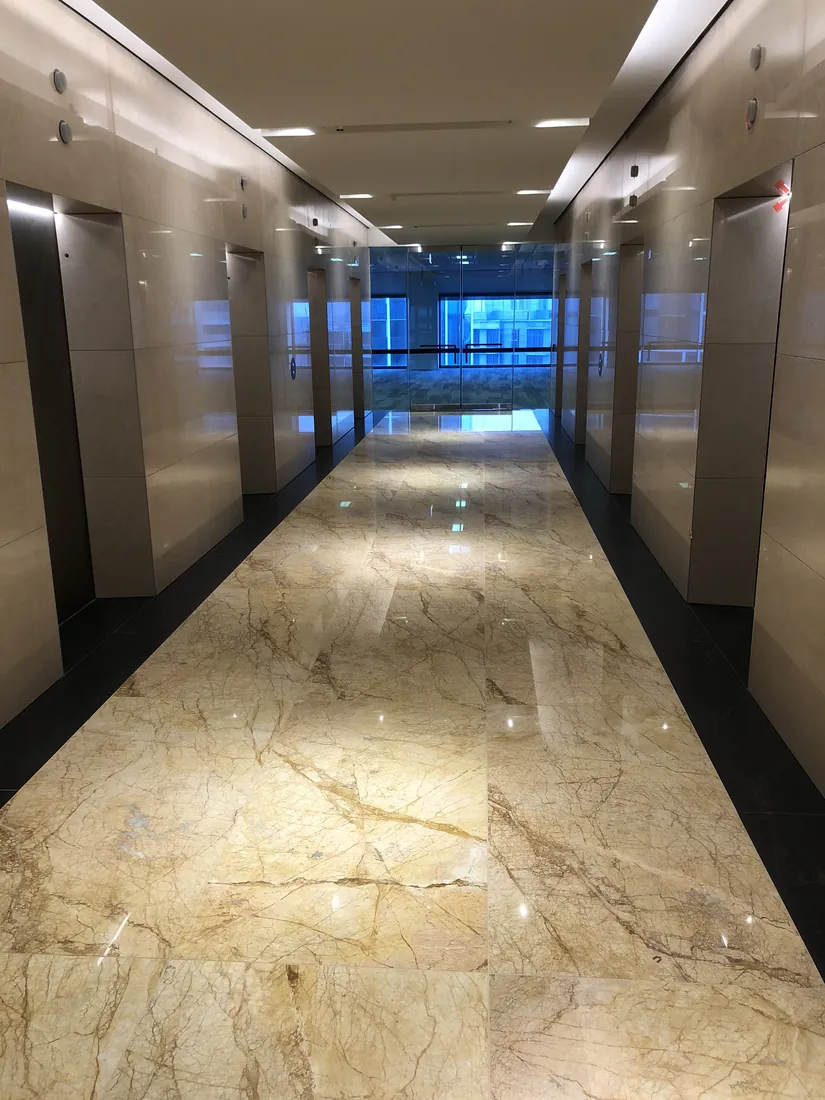
Marble is a natural stone formed from metamorphosed limestone, prized for its distinctive veining and soft, luminous appearance. No two marble slabs or tiles are exactly alike, which is a large part of its appeal for feature walls, vanity tops and statement bathroom surfaces.
Marble is naturally porous and reactive to acids, which means it can absorb moisture and staining liquids, and it can etch (lose its polished finish) when exposed to acidic products such as some soaps, perfumes and cleaning chemicals.
What is porcelain?
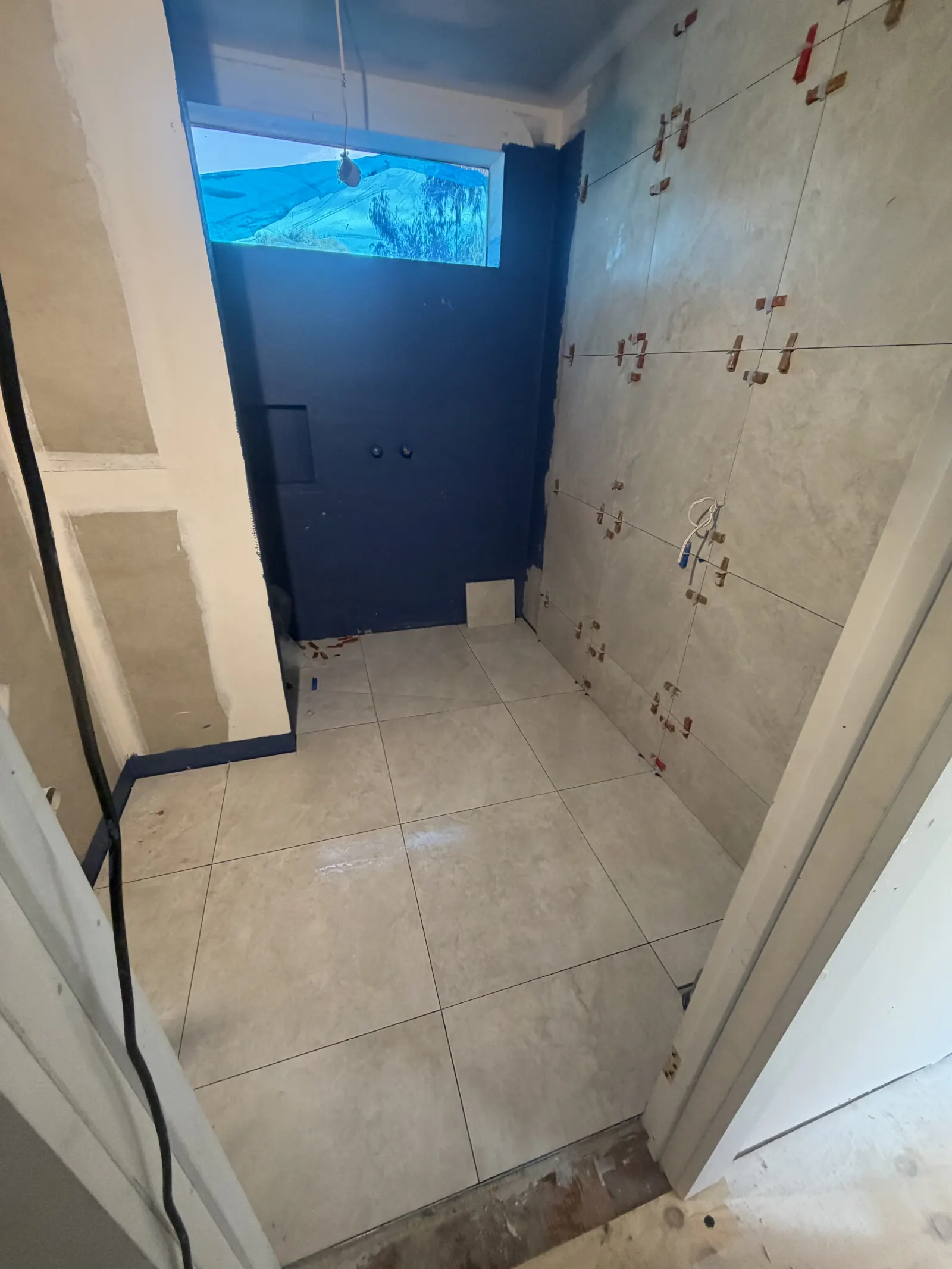
Porcelain is a manufactured tile made from fine clay fired at high temperatures, producing a very dense, low-porosity surface. Modern porcelain manufacturing has advanced to the point where many porcelain tiles closely replicate the look of marble, including realistic veining and a polished or honed finish, while performing very differently to the real stone.
Marble vs porcelain at a glance
| Feature | Marble | Porcelain |
|---|---|---|
| Water resistance | Lower; porous and needs sealing | Excellent; very low porosity, generally no sealing needed |
| Stain resistance | Lower without sealing and care | High |
| Etching risk | Yes, from acidic products | No, porcelain does not etch |
| Appearance | Natural, unique veining; every piece is different | Consistent; marble-look porcelain replicates veining via printing technology |
| Maintenance | Higher; regular sealing and careful product use required | Lower; routine cleaning is usually sufficient |
| Durability in wet areas | Good with proper sealing and care | Excellent; well suited to showers and constant moisture |
| Cost | Higher, especially for quality slabs | Generally lower, including high-end marble-look ranges |
| Best use in bathrooms | Feature walls, vanity tops, low-splash areas | Shower walls and floors, high-moisture areas, full bathroom floors |
Pros and cons of marble in bathrooms
Advantages of marble
- Natural, luxurious appearance: Unique veining that cannot be exactly replicated.
- Timeless style: Marble has been used in bathrooms for generations and remains a design favourite.
- Adds resale appeal: Genuine natural stone is often viewed as a premium feature.
- Cool to the touch: A pleasant, tactile quality in warmer climates.
Disadvantages of marble
- Porous: Needs sealing and resealing over time to resist staining.
- Prone to etching: Acidic soaps, cosmetics and cleaning products can dull or mark the polished surface.
- Higher maintenance: Requires careful product choice and regular care to keep its finish.
- Higher cost: Both materials and installation typically cost more than porcelain.
Pros and cons of porcelain in bathrooms
Advantages of porcelain
- Excellent water and stain resistance: Well suited to showers and constantly wet areas.
- No sealing required: Far less ongoing maintenance than marble.
- Does not etch: Unaffected by the acidic soaps and products that can damage marble.
- Wide range of marble-look finishes available: A practical way to get a similar aesthic with less upkeep.
- Generally more affordable: Including large-format and premium marble-look ranges.
Disadvantages of porcelain
- Manufactured look: Even high-quality marble-look porcelain can lack the subtle depth and randomness of real marble up close.
- Every slab of real marble is unique, porcelain patterns can repeat: Some buyers still prefer the guaranteed individuality of natural stone.
- Cutting and edge detailing can differ: Natural stone often allows for certain edge profiles and bookmatching that are harder to replicate with tiles.
Which is better for a shower?
For shower walls and floors, porcelain is generally the more practical choice. It handles constant moisture, soap and shampoo exposure, and everyday cleaning products without the risk of etching or staining that comes with marble. If you love the look of marble but are wary of its maintenance demands in a shower, a marble-look porcelain tile is worth considering as a lower-upkeep alternative. For more on how porcelain compares with other tile materials generally, see Porcelain vs Ceramic Tiles.
Where marble still works well in a bathroom
Marble does not have to be ruled out of a bathroom altogether. It performs best in lower-splash areas such as feature walls away from the direct shower stream, vanity tops (with proper sealing), and statement floor areas in larger bathrooms where moisture exposure is less constant and more manageable. Many bathroom designs use marble as a feature alongside porcelain in the shower for the best of both worlds.
Maintenance comparison
Marble needs regular sealing (generally reviewed every year or so, depending on use and product), careful selection of pH-neutral cleaning products, and prompt attention to spills to avoid staining or etching. For general maintenance guidance, see Natural Stone Benchtop Care and Maintenance and Stone Sealers Explained.
Porcelain requires far less specialised care. Routine cleaning with a standard bathroom cleaner and attention to grout lines is usually all that is needed to keep it looking good for years.
Cost considerations
Marble is typically more expensive than porcelain, both in material cost and in installation, since natural stone often requires more careful handling, cutting and sealing. Porcelain, including higher-end marble-look ranges, is generally more budget-friendly while still delivering a premium look, which is part of why it has become so popular in Australian bathroom renovations.
Marble and porcelain choices for bathrooms in Melbourne's west
TN Stone works with both natural stone and porcelain across bathroom renovations in Melbourne's western suburbs, including Brookfield, Werribee, Caroline Springs, Footscray and surrounding areas. A common approach in this region is porcelain for shower walls and floors for practicality, paired with a marble or marble-look feature on a vanity top or splashback for a premium finish without the full maintenance load of natural stone throughout the whole bathroom.
When to call a professional
Whether you choose marble, porcelain, or a combination of both, professional installation and sealing (where relevant) make a significant difference to how the bathroom performs over time. Incorrect sealing or grout choice around marble can lead to premature staining, while porcelain still needs correct waterproofing and grout selection behind the scenes to perform as expected.
TN Stone provides tiling and stonemasonry services across Melbourne and the western suburbs, including Brookfield, Werribee, Caroline Springs, Footscray and surrounding areas. If you are deciding between marble and porcelain for your bathroom renovation, contact TN Stone for advice or a quote.
Deciding between marble and porcelain for your bathroom? Get a free, no-obligation quote from TN Stone.
Request a Free QuoteFrequently asked questions
Is marble or porcelain better for a bathroom floor?
Porcelain is generally the more practical choice for bathroom floors because it handles moisture and everyday wear with less maintenance than marble.
Does marble need to be sealed in a bathroom?
Yes. Marble is porous and should be sealed to help resist staining and moisture absorption, with resealing needed periodically depending on use.
Can porcelain look like real marble?
Modern marble-look porcelain can closely replicate the appearance of natural marble, including realistic veining, while offering much lower maintenance and better moisture resistance.
Why does marble etch and porcelain doesn't?
Marble is a natural stone that reacts to acidic substances, which can dull or mark its polished surface. Porcelain is a manufactured, non-reactive material that is not affected by the same acidic exposure.
Is marble worth the extra cost in a bathroom?
For many homeowners, yes, particularly as a feature element, because of its unique natural appearance. For full wet-area coverage such as shower walls and floors, many people prefer porcelain for its practicality and lower maintenance, sometimes reserving marble for accent areas.