Natural Stone Benchtop Care and Maintenance Guide
Natural stone benchtops can look incredible in kitchens, bathrooms and outdoor entertaining areas, but they do need the right care. Stone is durable, but it is not maintenance-free. In this guide, we explain how to clean, seal and protect natural stone benchtops in Australian homes, including granite, marble, limestone, travertine and similar surfaces.
Key takeaways
- Use pH-neutral cleaners or mild stone-safe products for everyday cleaning.
- Wipe spills quickly, especially acidic, oily or strongly coloured liquids.
- Most natural stone needs sealing at intervals depending on the stone type, finish and level of use.
- Avoid harsh chemicals and abrasives, as they can etch, dull or damage the surface.
Why natural stone needs special care
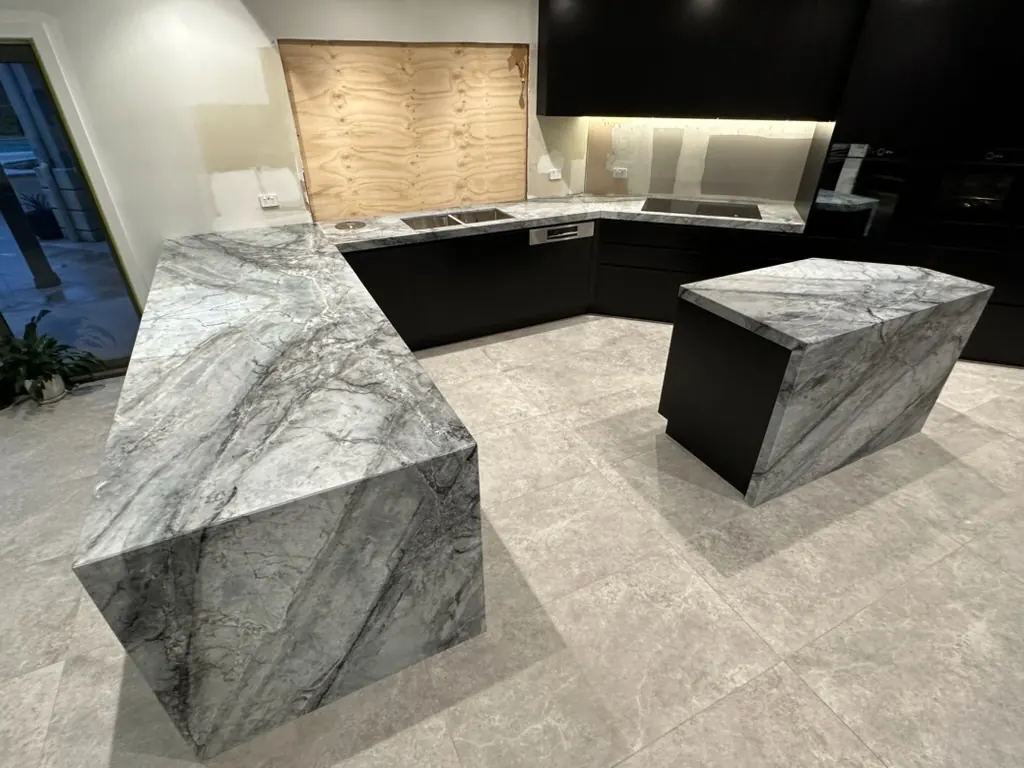
Natural stone is not a single material. Granite, marble, limestone, travertine and other stones all behave differently, but many are porous to some degree and can absorb moisture, oil or staining substances if left unprotected.
Even harder stones such as granite still benefit from sensible maintenance. Softer or more porous stones, such as marble and limestone, generally need more careful cleaning and sealing to maintain their appearance over time. See our Types of Stone and Tile Used in Australia guide for how these stones compare.
Daily cleaning for natural stone benchtops
For most day-to-day cleaning, the safest approach is simple:
- Use a soft cloth or microfibre cloth
- Use warm water
- If needed, use a pH-neutral cleaner or mild stone-safe detergent
- Dry the surface after cleaning to reduce streaks and residue
In many cases, warm water and a soft cloth are enough for routine cleaning. If the surface is dirtier, use only products clearly labelled as suitable for natural stone.
What cleaners to avoid
Avoid harsh, acidic or abrasive products. These can break down sealers, dull polished finishes, and damage the stone itself over time.
- Vinegar
- Lemon or citrus-based cleaners
- Bleach
- Bathroom cleaners with harsh acids
- Cream cleansers and scouring powders
- Rough scouring pads or abrasive scrubbers
Many homeowners assume a strong cleaner will give a better result, but with natural stone the opposite is often true. Gentle, stone-safe products are usually the better long-term option.
How to deal with spills
The most important maintenance habit is to clean spills quickly. This matters most with:
- Wine
- Coffee
- Oil and grease
- Tomato-based sauces
- Citrus juice
- Vinegar
- Alcohol
When a spill happens, blot it rather than spreading it around. Then clean the area with water and a neutral cleaner, rinse if needed, and dry with a soft cloth.
Do natural stone benchtops need sealing?
In many cases, yes. Natural stone is porous to varying degrees, and sealing helps slow the absorption of liquids, oils and staining agents.
Sealing does not make the stone indestructible or permanently stain-proof, but it does provide an important layer of protection. Even sealed stone should still be cleaned and looked after properly.
How often should stone benchtops be sealed?
There is no single schedule for every stone. The right interval depends on the material, finish, location and how heavily the surface is used.
- Granite: often sealed roughly every 12 months in normal household use, depending on the product and stone.
- Marble: may need more frequent attention than granite, especially in kitchens and wet areas.
- Limestone and travertine: often need regular sealing because they are generally more porous.
A simple way to check is to see whether water still beads on the surface. If it no longer beads and starts to darken the stone quickly, resealing may be due.
Care tips by stone type
Granite benchtops
Granite is one of the more durable natural stone options and generally performs very well in kitchens. It still benefits from sealing and should not be treated as completely stain-proof or heat-proof.
- Use pH-neutral or stone-safe cleaners
- Wipe oil, wine and coloured spills quickly
- Use cutting boards to avoid scratches and dull spots
- Use trivets for hot cookware to reduce thermal stress
Marble benchtops
Marble is more delicate than granite and is more prone to etching, staining and scratching. It is beautiful, but it needs more care and quicker response to spills.
- Avoid acidic foods and cleaners sitting on the surface
- Use only soft cloths and gentle cleaners
- Never cut directly on the surface
- Wipe spills immediately, especially citrus, wine and tomato-based products
Limestone benchtops
Limestone has a soft, refined appearance but is usually more porous than denser stones. It should be sealed and cleaned carefully with neutral products only.
- Keep acidic products away from the surface
- Reseal as needed based on use and supplier advice
- Use coasters, chopping boards and trays where possible
Travertine benchtops
Travertine has natural movement and character but typically needs sealing and more care than porcelain or engineered surfaces. Pits and texture can also make maintenance a little more involved.
- Keep the surface dry and clean after use
- Use stone-safe cleaners only
- Maintain sealing as recommended for the product
Can you put hot pots on natural stone?
Even though some natural stones have good heat resistance, it is still better to use trivets or heat protection. Sudden temperature changes, very hot cookware or repeated heat exposure can contribute to damage, discolouration or stress in the surface over time.
It is also best not to place very cold or very hot items directly on stone for long periods if you can avoid it.
Can you cut directly on natural stone?
It is not recommended. Even durable stones can be scratched, dulled or marked by repeated cutting in the same area. Cutting directly on stone can also damage your knives.
A chopping board is always the safer option for both the benchtop and your tools.
How to prevent staining and wear
- Wipe spills immediately
- Use cutting boards and trays
- Use trivets under hot cookware
- Use coasters under bottles, oils and drinks
- Keep acidic products off the surface where possible
- Reseal the stone when needed
- Use only pH-neutral or stone-safe cleaning products
Signs your benchtop may need attention
It may be time to reseal, restore or get professional advice if you notice:
- Water no longer beads on the surface
- The stone darkens quickly when wet
- Stains are appearing more easily
- The finish looks dull, etched or patchy
- There are marks that do not come off with normal stone-safe cleaning
Best cleaning approach for most homes
For most households, the safest and most practical routine is simple:
- Wipe the benchtop daily with a soft damp cloth.
- Use a stone-safe neutral cleaner when needed.
- Dry the surface after cleaning.
- Clean spills quickly.
- Check sealing regularly and reseal when needed.
This routine helps protect the finish without overcomplicating maintenance.
When to call a professional
If your stone is badly stained, etched, chipped or losing its finish, it is best to get professional advice rather than experimenting with harsh cleaners or DIY repair methods. Some products can make the damage worse, especially on premium stones.
TN Stone provides tiling, stonemasonry and surface advice across Melbourne and the western suburbs, including Brookfield, Werribee, Caroline Springs, Footscray and surrounding areas. See our Stone Benchtops service page for installation and fabrication work.
Common questions
- Can stone benchtops be repaired?
- How should granite be maintained?
- How long does stone benchtop installation take?
Need advice on stone selection, sealing or restoring a benchtop? Get a free, no-obligation quote from TN Stone.
Request a Free QuoteFrequently asked questions
What is the best cleaner for natural stone benchtops?
A pH-neutral cleaner or mild stone-safe cleaning product is usually the best choice, used with a soft cloth or microfibre cloth.
Can I use vinegar on stone benchtops?
No. Vinegar and other acidic cleaners can etch or damage many natural stone surfaces and can also break down sealers.
How often should I seal natural stone benchtops?
It depends on the stone type, finish and usage. Some granite surfaces may be resealed about yearly, while more porous stones may need more frequent attention.
Do granite benchtops need sealing?
In many cases, yes. Granite is more resistant than some other stones, but it is still slightly porous and often benefits from periodic sealing.
What damages marble benchtops?
Marble is commonly damaged by acidic spills, harsh cleaners, abrasive tools and poor spill management, all of which can lead to etching, scratching or staining.