Kitchen Benchtop Sealers in Australia: What You Need to Know
If you're choosing or maintaining a natural stone kitchen benchtop, sealing is one of the most important topics to understand. Not every surface needs the same level of protection, and not every sealer works the same way. In this guide, we explain which benchtops need sealing, how stone sealers work, how often they should be reapplied, and what Australian homeowners should know before choosing a product.
Key takeaways
- Most natural stone benchtops benefit from sealing, especially granite, marble, limestone and travertine.
- Penetrating or impregnating sealers are commonly preferred for stone benchtops because they help protect below the surface without creating a thick coating.
- Sealers reduce absorption of water, oil and staining substances, but they do not make stone permanently stain-proof.
- Resealing frequency varies depending on the stone type, finish, use and sealer quality.
What does a stone sealer actually do?
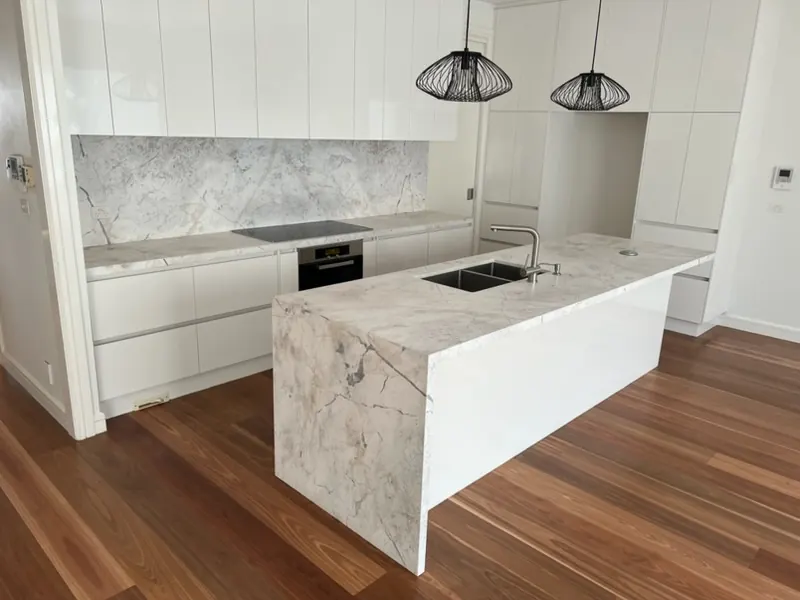
A stone sealer helps reduce how quickly liquids and oils are absorbed into porous stone. This gives you more time to wipe up spills and helps lower the risk of staining.
A sealer is not a plastic shield and it does not make stone indestructible. Acidic substances, harsh cleaners, long-standing spills and poor maintenance can still damage or mark the surface.
Which kitchen benchtops need sealing?
Granite benchtops
In many Australian homes, granite benchtops are sealed during fabrication or installation and then resealed periodically as needed. Granite is lower-porosity than softer stones, but it can still absorb oil and liquids over time if left unsealed or if the sealer wears down.
Marble benchtops
Marble is usually more porous and more sensitive than granite, so sealing is very important. It can absorb oils and is also vulnerable to etching from acids, which sealing helps with only to a limited extent.
Limestone and travertine benchtops
Limestone and travertine are generally more porous than granite and often need regular sealing, especially in kitchens where food, oils and liquids are used every day.
Porcelain benchtops
Porcelain benchtops generally do not need sealing in the same way natural stone does. They are usually very low-porosity and easier to maintain.
Engineered or man-made surfaces
Many man-made surfaces were historically sold as non-porous and lower-maintenance, but product care depends on the exact material. For current Australian projects, always check the exact product type and legal availability, especially if it is described in ways that sound similar to engineered stone — see our Granite vs Engineered Stone Benchtops guide for the current rules.
Types of stone sealers in Australia
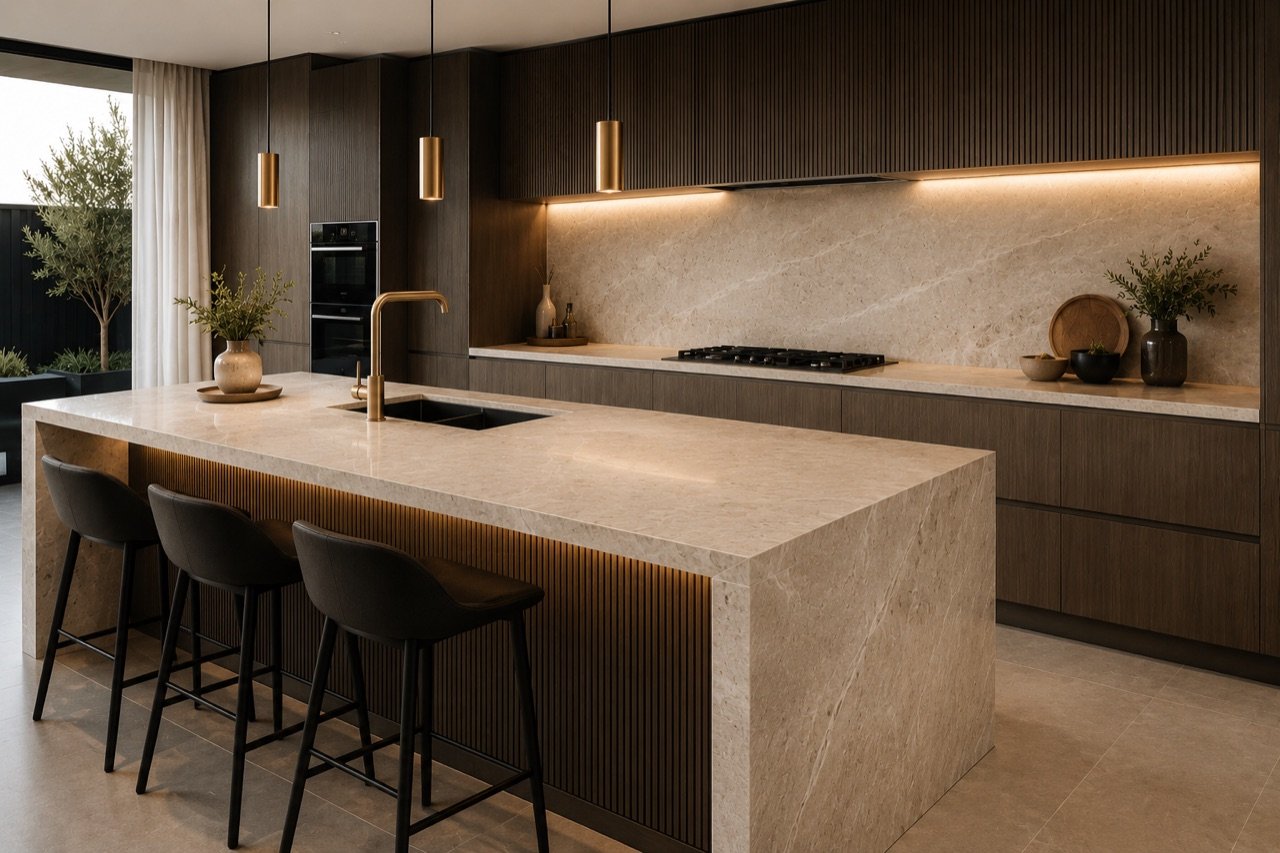
Penetrating or impregnating sealers
These are the most common sealers recommended for natural stone benchtops. They soak into the stone and help reduce absorption below the surface while keeping the natural look of the material.
For many kitchen benchtops, this is the preferred type because it protects without creating a heavy film on top.
Topical or surface sealers
Topical sealers sit more on the surface and can create a coating or film. They may be used in some situations, but they are often less preferred for kitchen benchtops because surface films can wear unevenly, change the appearance, or require more maintenance.
If you are sealing a kitchen benchtop, it is usually worth checking whether the product is designed specifically for food-prep areas and natural stone use.
Enhancing sealers
Some sealers are designed not only to protect the stone but also to deepen or enrich its colour. These are sometimes used where homeowners want a darker or "wet look" finish.
This can work well on some natural stones, but it changes the appearance, so it is best tested carefully before full application.
How often should a benchtop be resealed?
There is no one-size-fits-all schedule. Resealing depends on:
- The type of stone
- The finish of the stone
- How heavily the benchtop is used
- How often spills happen
- The type and quality of sealer previously used
In many Australian stone-care guides, granite is often checked yearly and may be resealed roughly every 12 months to every few years depending on the material and use. More porous stones like marble, limestone and travertine often need more frequent attention.
How to tell if your benchtop needs resealing
A simple way to test the current seal is to place a few drops of water on the stone and watch what happens.
- If the water beads on the surface for a good amount of time, the sealer may still be working well.
- If the water darkens the stone quickly or absorbs fast, resealing may be needed.
Some suppliers suggest timing how long the water takes to soak in, but the exact threshold varies. The main sign is whether the stone is still resisting absorption effectively.
What sealers can and cannot protect against
| What sealers help with | What sealers do not fully prevent |
|---|---|
| Slowing absorption of water | Etching from acids on acid-sensitive stones |
| Reducing oil penetration | Damage from harsh or abrasive cleaners |
| Giving more time to clean spills | Heat damage from very hot cookware |
| Helping reduce staining risk | Chipping from impact |
| Supporting easier maintenance | Poor cleaning habits or long-standing spills |
Best sealer approach by material
Granite
Granite often performs well with an impregnating or penetrating sealer. It is already a fairly durable stone, but sealing helps reduce staining from oils, grease, coffee and strongly coloured liquids.
Marble
Marble should usually be protected with a quality penetrating sealer, but owners also need to understand that sealing does not stop acid etching. Careful cleaning habits are still essential.
Limestone and travertine
These softer, more absorbent stones often need regular sealing and gentle maintenance. In kitchens, they can be beautiful but higher-maintenance than granite or porcelain.
Can you seal a benchtop yourself?
In many cases, yes. Some sealers are designed for homeowner application, and resealing can be a manageable DIY maintenance task if the instructions are followed carefully.
However, if the stone is stained, badly worn, has an unknown previous sealer, or is a premium material you do not want to risk damaging, it can be worth getting professional advice first.
General sealing steps
Always follow the specific product instructions, but the basic process is usually:
- Clean the benchtop thoroughly with a stone-safe cleaner.
- Allow the surface to dry fully.
- Apply the sealer evenly as directed.
- Allow the sealer to penetrate for the recommended time.
- Wipe off all excess residue.
- Allow proper curing before heavy use.
Leaving excess sealer on the surface can create haze or uneven results, so cleanup matters just as much as application.
Common mistakes to avoid
- Assuming sealing makes stone stain-proof: it does not.
- Using the wrong sealer type: not every product suits every stone.
- Applying sealer to a dirty or damp surface: this can trap problems underneath.
- Forgetting to wipe off excess: this can leave streaks or haze.
- Using harsh cleaners after sealing: this can shorten sealer life and damage the stone.
Best maintenance routine after sealing
- Clean daily with a soft cloth and water or a pH-neutral cleaner
- Wipe spills quickly
- Use chopping boards and trivets
- Avoid acidic and abrasive cleaners
- Check sealing performance periodically with a simple water test
For the full daily-care routine, see our Natural Stone Benchtop Care and Maintenance guide.
When to get professional advice
If you are not sure which stone you have, whether the surface is already sealed, or which sealer is appropriate, it is worth asking a professional before applying anything. This is especially important with marble, limestone, travertine and premium granite surfaces.
TN Stone provides tiling, stonemasonry and surface advice across Melbourne and the western suburbs, including Brookfield, Werribee, Caroline Springs, Footscray and surrounding areas.
Not sure which sealer your benchtop needs? Get a free, no-obligation quote from TN Stone.
Request a Free QuoteFrequently asked questions
Do granite benchtops need sealing?
In many cases, yes. Granite is lower-porosity than some other natural stones, but it can still benefit from sealing to reduce staining and make maintenance easier.
How often should I seal a stone benchtop?
It depends on the stone, finish and usage. Granite may be checked yearly and resealed roughly every 1–3 years or sooner if the surface absorbs water quickly, while more porous stones may need more frequent attention.
What is the best type of sealer for natural stone benchtops?
A penetrating or impregnating sealer is often the preferred option because it helps protect the stone without leaving a thick surface film.
Does marble need sealing?
Yes, in most cases. Marble is porous and generally benefits from sealing, although sealing will not fully stop etching from acids.
Can I use vinegar to clean a sealed benchtop?
No. Vinegar and other acidic cleaners can damage natural stone and may also reduce the effectiveness of the sealer over time.