How to Clean Natural Stone Without Damaging It
Natural stone can last for decades and look better with age, but only if it is cleaned the right way. The wrong cleaner or tool can scratch, dull or etch the surface, especially on softer stones such as marble and limestone. In this guide, we explain how to clean natural stone safely, what products to avoid, and how to care for common stone surfaces in Australian homes.
Key takeaways
- Use warm water, a soft cloth and a pH-neutral cleaner for most routine cleaning.
- Blot spills quickly, especially oil, wine, coffee, lemon juice and other staining or acidic substances.
- Avoid vinegar, bleach, abrasive powders and scouring pads on natural stone.
- Different stones need different levels of care, with marble and limestone usually requiring the most caution.
Why natural stone needs special cleaning
Natural stone is not one single material. Granite, marble, limestone, travertine and slate all have different levels of hardness, porosity and chemical sensitivity.
Some stones are more likely to absorb liquids, while others are more likely to etch or scratch. That is why using a generic household cleaner can be risky, even if it seems harmless on other surfaces. See our Types of Stone and Tile Used in Australia guide for how these stones compare.
The safest everyday cleaning method
For most natural stone surfaces, the best daily cleaning method is simple:
- Wipe the surface with a soft cloth or microfibre cloth.
- Use warm water.
- If needed, use a pH-neutral or stone-safe cleaner.
- Rinse lightly if required.
- Dry the surface with a clean soft cloth to prevent streaks or water marks.
This approach is suitable for many stone benchtops, vanities, splashbacks and wall surfaces. For floors, use a soft mop and avoid dragging grit across the surface.
What cleaners to avoid on natural stone
Some of the most common cleaning mistakes involve using products that are too harsh for stone. Avoid:
- Vinegar
- Lemon-based cleaners
- Bleach
- Strong bathroom or grout cleaners
- Ammonia-heavy products unless clearly stone-safe and used correctly
- Scouring powders and cream cleansers with grit
- Steel wool and abrasive scrubbing pads
Acidic products can etch calcium-based stones like marble and limestone, while abrasive cleaners can leave scratches or dull patches on many stone surfaces.
How to clean spills the right way
If something spills on stone, act quickly. The correct approach is usually:
- Blot the spill rather than wiping it around.
- Use a soft cloth or paper towel to absorb as much as possible.
- Clean the area with water and a neutral cleaner if needed.
- Rinse lightly and dry thoroughly.
This is especially important for wine, coffee, oil, tomato-based sauces, lemon juice, vinegar and cleaning chemicals, which can stain or damage some stones if left too long.
How to clean different types of natural stone

Granite
Granite is one of the more durable natural stones, but it still benefits from gentle cleaning. A pH-neutral cleaner, warm water and a soft cloth are usually the safest options.
Avoid assuming granite is fully stain-proof or chemical-proof. It still needs sensible care and may also need sealing from time to time — see our Kitchen Benchtop Sealers guide.
Marble
Marble needs more caution than granite. It is more likely to etch from acidic products and can scratch more easily if cleaned with abrasive tools or powders.
Always use only cleaners clearly safe for marble and avoid any product that does not specifically state stone compatibility.
Limestone
Limestone is usually softer and more porous than granite. It should be cleaned gently with soft cloths or mops and only neutral cleaners that are safe for stone.
Acidic products can damage limestone quickly, so extra care is needed in kitchens and bathrooms.
Travertine
Travertine often has natural pits and a textured structure, which can trap residue if not cleaned properly. Use stone-safe cleaners, avoid abrasive scrubbing, and keep spills under control.
Slate
Slate is often more textured than polished stone, so dirt and residue can sit in the surface more easily. Use gentle cleaning methods and avoid aggressive scrubbing tools that may scratch or wear the finish.
How to clean natural stone floors
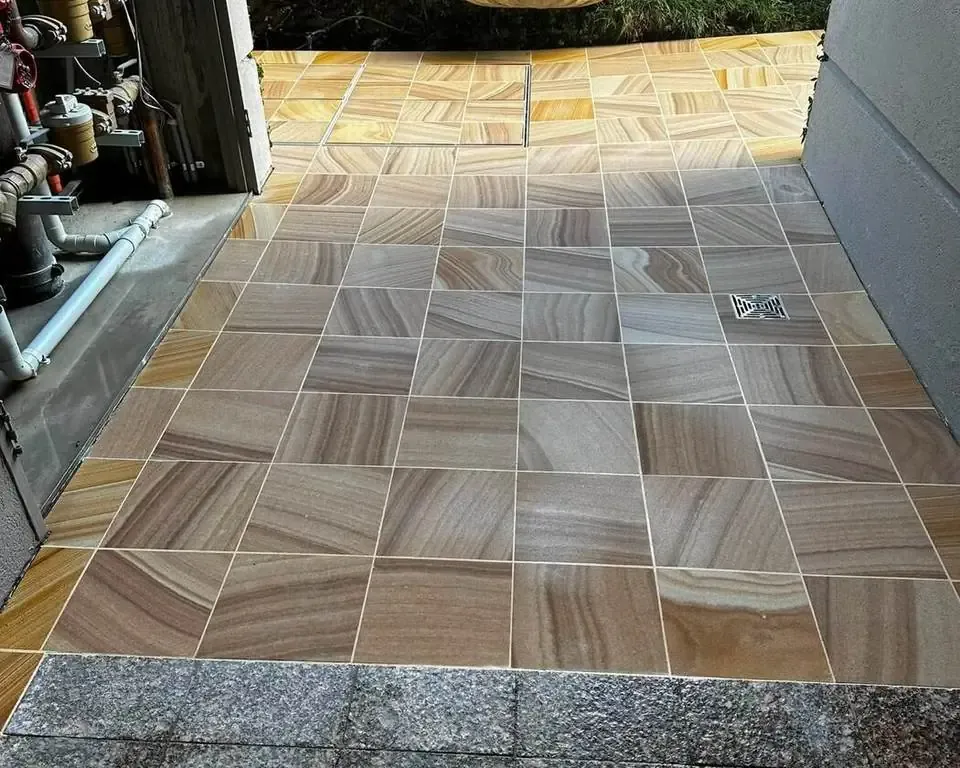
Stone floors need a little more attention because grit, sand and dirt can scratch the surface as people walk over it.
- Sweep or dust mop regularly
- Use a vacuum only if the attachments will not scratch the surface
- Mop with warm water and a pH-neutral cleaner
- Use mats at entry points to reduce tracked-in grit
- Dry the floor after cleaning where appropriate
On polished floors, removing grit quickly is often just as important as the actual wet cleaning step.
How to clean natural stone benchtops
Benchtops usually only need simple, regular maintenance:
- Wipe daily with a soft damp cloth
- Use a neutral cleaner for food residue or grease
- Dry after cleaning
- Use chopping boards, trays and trivets
- Keep acids, oils and dyes from sitting on the surface
This is especially important for marble, limestone and travertine, which are generally more sensitive than porcelain or some harder stones. See our full Natural Stone Benchtop Care and Maintenance guide.
Can you use dish soap on natural stone?
In some cases, a mild dishwashing liquid diluted with water can be used carefully for light cleaning, but it should be mild, used sparingly and rinsed off properly. Repeated use of the wrong detergent or leaving residue behind can dull the finish over time.
A dedicated pH-neutral stone cleaner is usually the safer long-term choice.
What about mould, soap scum or heavier grime?
Wet areas like showers and bathrooms sometimes need a deeper clean, but you still need to avoid acidic and abrasive products. Use only products that clearly state they are safe for natural stone.
Soap scum can often be reduced by drying or squeegeeing wet surfaces regularly. For stubborn buildup, it is better to use a stone-safe specialist cleaner than a harsh off-the-shelf bathroom product. TN Stone also offers professional soft wash and pressure washing services for exterior stone and tiled surfaces.
Common mistakes to avoid
- Using vinegar on stone: this can etch marble, limestone and other acid-sensitive materials.
- Scrubbing with abrasive pads: this can scratch or dull the surface.
- Leaving spills too long: stone can stain or mark if liquids soak in.
- Using generic bathroom or grout cleaners: these are often too harsh for natural stone.
- Letting floors stay gritty: dirt and sand can scratch underfoot.
- Allowing water to air-dry everywhere: this can leave streaks, residue or water spotting on some finishes.
Signs your stone may need more than cleaning
Sometimes the issue is not dirt but damage or worn protection. You may need professional advice if you notice:
- Dull or etched patches
- Stains that do not lift with safe cleaning
- Water soaking into the stone quickly
- Persistent discolouration
- Scratches, chips or surface wear
In these cases, the stone may need resealing, stain treatment, honing, polishing or restoration rather than stronger cleaning chemicals.
Best long-term care habits
- Use pH-neutral or stone-safe cleaners only
- Wipe spills immediately
- Use mats, trivets, coasters and chopping boards
- Keep grit off floors
- Reseal porous stone when needed
- Test unfamiliar products in a small hidden area first
When to call a professional
If your natural stone is badly stained, etched, heavily marked or losing its finish, do not jump straight to stronger chemicals. The wrong product can make the damage worse.
TN Stone provides tiling, stonemasonry and surface advice across Melbourne and the western suburbs, including Brookfield, Werribee, Caroline Springs, Footscray and surrounding areas.
Common questions
- How should marble be cleaned?
- Can I use strong cleaning chemicals?
- How should granite be maintained?
Dealing with stained, etched or dull stone? Get a free, no-obligation quote from TN Stone.
Request a Free QuoteFrequently asked questions
Can I use vinegar on natural stone?
No. Vinegar and other acidic cleaners can etch and damage many natural stone surfaces, especially marble and limestone.
What is the best cleaner for natural stone?
A pH-neutral or stone-safe cleaner used with a soft cloth or microfibre cloth is usually the safest option for everyday cleaning.
Can I use bleach on natural stone?
It is generally best avoided unless a product is clearly intended for stone and used exactly as directed. Harsh bleach-based products can damage some finishes and should not be treated as a routine cleaner for natural stone.
How do I clean marble without damaging it?
Use warm water, a soft cloth and a cleaner clearly labelled safe for marble. Avoid any acidic or abrasive product.
Why does my stone look dull after cleaning?
Dullness can be caused by residue, etching, abrasive damage, hard water marks or worn sealer. If normal stone-safe cleaning does not fix it, the surface may need restoration rather than more aggressive cleaning.