Best Stone Choices for Kitchens and Bathrooms in Australia
Choosing the right stone for a kitchen or bathroom is not just about appearance. The best option depends on how the space is used, how much moisture or staining it will face, how much maintenance you are comfortable with, and whether you want a natural or more uniform look. In this guide, we compare the main stone and stone-look options used in Australian kitchens and bathrooms so you can choose with more confidence.
Key takeaways
- Granite and quartzite are often among the strongest choices for busy kitchens.
- Marble, limestone and travertine can look stunning, but they usually need more care.
- Porcelain is increasingly popular for low-porosity, heat-resistant kitchen and bathroom surfaces.
- The best stone depends on the application, not just the colour or trend.
What matters most when choosing stone?
Before comparing materials, it helps to think about where the stone will be used and what it will need to handle. The same stone that works beautifully on a bathroom wall may not be the best fit for a family kitchen island.
Important questions include:
- Will the surface face oils, wine, coffee, lemon juice or food acids?
- Is it a wet area that needs strong moisture resistance?
- Does it need to handle hot cookware or heavy daily use?
- Do you want low maintenance or are you happy to care for a premium natural finish?
- Is slip resistance important for floors?
Best stone options for kitchens
Granite
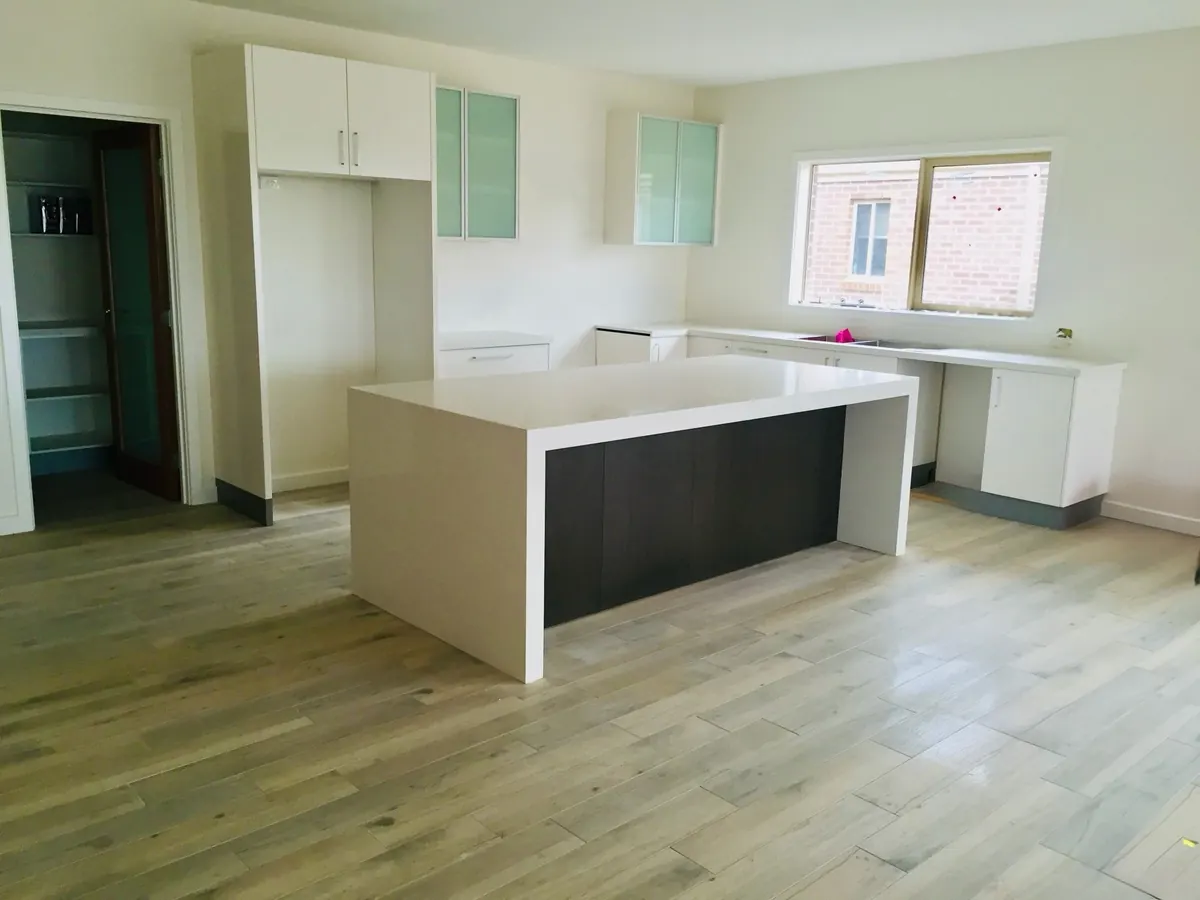
Granite is one of the most dependable choices for busy kitchens. It is widely valued for durability, strong heat resistance and better day-to-day forgiveness than softer stones.
Once properly sealed, granite can perform very well against common kitchen use, which is why it is often recommended for benchtops, islands and even outdoor cooking areas. See our Granite vs Engineered Stone Benchtops guide for more detail.
Quartzite
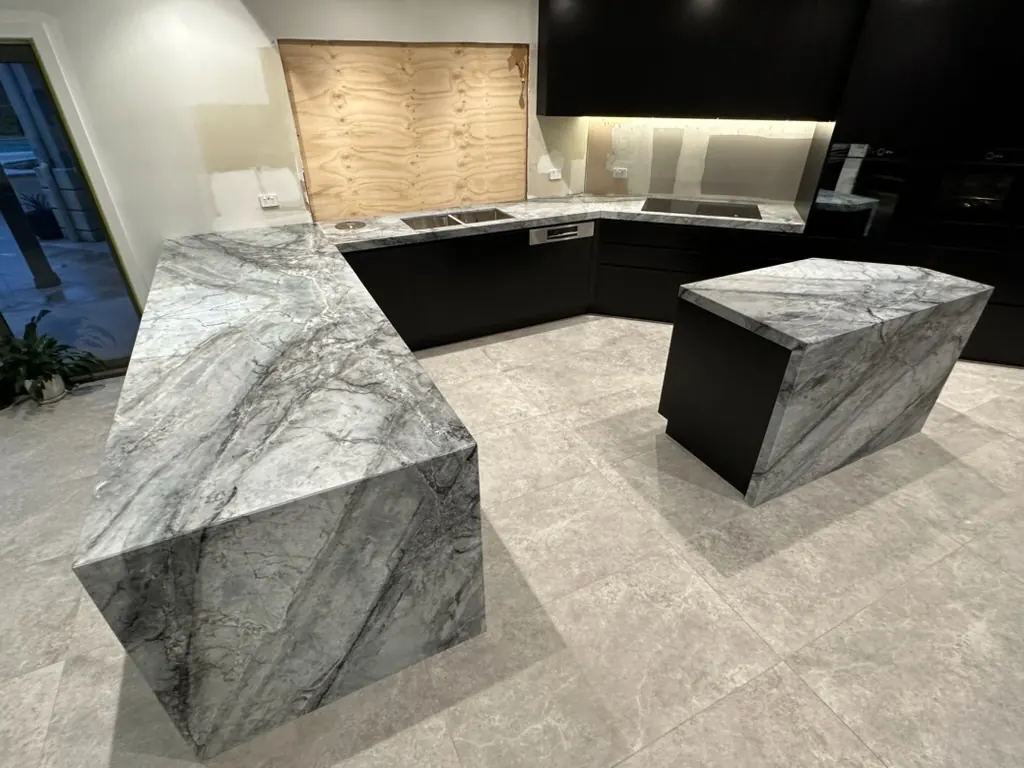
Quartzite is often seen as a premium all-rounder because it combines a natural stone look with strong hardness and durability. It is commonly used for kitchen benchtops, splashbacks, feature walls and other high-value surfaces.
It often appeals to homeowners who like marble-style movement but want a tougher material for everyday kitchen use.
Porcelain
Porcelain slabs are a fast-growing premium surface option in Australia. They are valued for being hard, low-porosity, heat-resistant and UV-stable, which makes them appealing for kitchens and some indoor-outdoor applications.
For homeowners who want a cleaner, more controlled look with lower routine maintenance, porcelain is often high on the shortlist. See our Large Format Porcelain Installation service page.
Marble
Marble is one of the most beautiful stone choices available, but it is usually better suited to homeowners who accept a higher-maintenance surface. In kitchens, marble can etch from acidic substances and may stain more easily than harder, denser materials.
It can still work beautifully, but it is usually chosen for the look rather than maximum practicality.
Limestone and travertine
Limestone and travertine create warmth and softness that many modern homes aim for, but they are generally more porous and more maintenance-heavy in kitchen settings. They are often better suited to lower-stress or more design-led applications than to hard-working family benchtops.
Best stone options for bathrooms
Marble
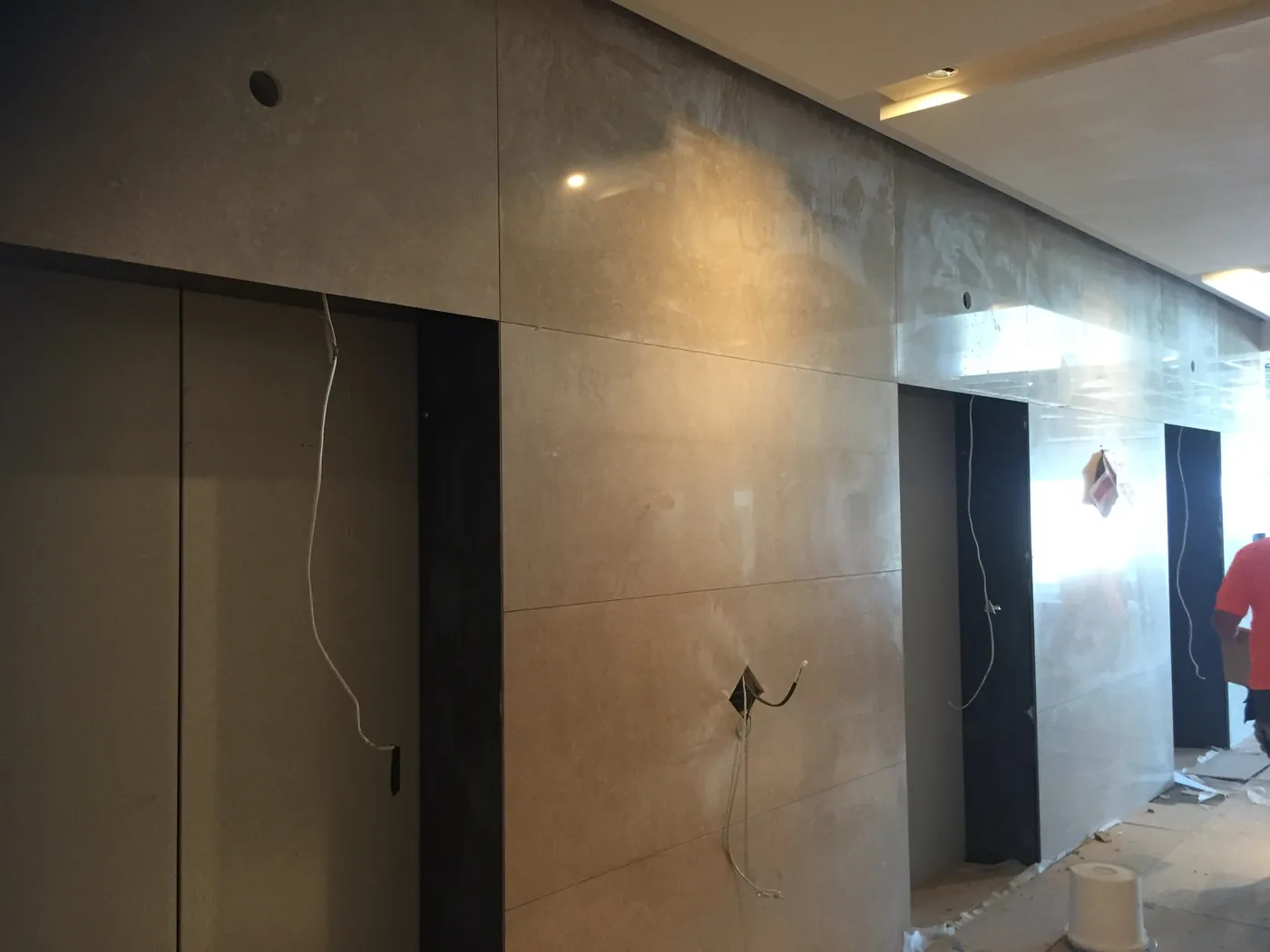
Marble is a classic bathroom choice because it delivers a premium, elegant and timeless feel. It is commonly used on vanities, feature walls and low-traffic bathroom surfaces where visual impact matters most.
In bathrooms, marble still needs careful cleaning and sealing, but it is often easier to manage there than in kitchens because it is exposed to fewer food acids.
Granite
Granite is also a strong bathroom option, especially in main bathrooms where you want a surface that handles moisture well and is less absorbent than softer stones. It can be a smart choice for vanities, ledges and some floor applications depending on finish.
Limestone
Limestone is popular for calm, soft, spa-like bathrooms. It works especially well in design-led interiors where warmth and texture matter more than ultra-low maintenance.
Because it is more porous and more chemically sensitive than granite, sealing and careful cleaning are important.
Travertine
Travertine is often chosen for its texture and natural character. It is popular on bathroom walls, vanity features and flooring where a softer, earthy look is part of the design.
Like limestone, it usually needs more sealing and ongoing care than harder or less porous alternatives.
Porcelain
Porcelain is a very practical bathroom material because it is low-porosity, easy to clean and available in a wide range of stone-look finishes. It is especially useful where homeowners want the look of natural stone but less maintenance.
Stone comparison by priority
| Priority | Best fit | Why |
|---|---|---|
| Busy family kitchen | Granite or quartzite | Strong durability, good heat performance, better day-to-day forgiveness |
| Luxury bathroom vanity | Marble or quartzite | Premium appearance and natural statement look |
| Low-maintenance modern kitchen | Porcelain | Low porosity, heat resistance, cleaner controlled look |
| Warm spa-like bathroom | Limestone or travertine | Soft texture and natural warmth |
| Outdoor kitchen or exposed area | Granite or porcelain | Good durability and strong performance in demanding conditions |
| Marble look with better toughness | Quartzite | Natural movement with stronger everyday performance |
Natural stone vs porcelain
One of the biggest decisions today is whether to choose a natural stone or a stone-look porcelain surface. Natural stone offers unique variation and one-of-a-kind slabs, while porcelain offers consistency, low porosity and strong practical performance.
Homeowners who value character, natural movement and individuality often lean toward stone. Homeowners who prioritise low maintenance, predictability and simpler upkeep often lean toward porcelain. See our Porcelain vs Ceramic Tiles guide for a related comparison.
What about engineered stone?
Any Australian page about benchtop materials should now acknowledge the engineered stone ban. The manufacture, supply, processing and installation of covered engineered stone benchtops, panels and slabs has been banned in Australia since 1 July 2024, with banned imports starting from 1 January 2025.
That means current comparisons are more likely to focus on granite, quartzite, marble, porcelain and other compliant alternatives rather than the old engineered-stone-first approach. See our Granite vs Engineered Stone Benchtops guide for the full detail on the ban.
Best choices by room
For kitchens
- Best all-rounders: granite, quartzite
- Best low-maintenance option: porcelain
- Best premium design statement: marble, if you accept the maintenance
For bathrooms
- Best elegant statement materials: marble, travertine, limestone
- Best practical family-bathroom option: granite or porcelain
- Best balance of beauty and toughness: quartzite
How to make the final decision
The right material is the one that suits both your design goals and your lifestyle. A beautiful stone that does not match how you use the space can become frustrating very quickly.
It is often worth choosing samples in person, checking slab variation, asking about sealing requirements, confirming suitability for wet or high-heat areas, and understanding the maintenance before installation begins. See our Natural Stone Benchtop Care and Maintenance guide for what ongoing care actually looks like.
When to get professional advice
Material selection affects not just the look of the room, but also installation details, edge profiles, sealing, cleaning, slip resistance and long-term durability. That is why choosing stone for kitchens and bathrooms is usually easier when you have advice specific to the application.
TN Stone provides tiling, stonemasonry and renovation advice across Melbourne and the western suburbs, including Brookfield, Werribee, Caroline Springs, Footscray and surrounding areas.
Common questions
- What is the best stone for kitchen benchtops?
- Do you fabricate custom stone vanity tops?
- What is travertine?
Choosing stone for a kitchen or bathroom renovation? Get a free, no-obligation quote from TN Stone.
Request a Free QuoteFrequently asked questions
What is the best stone for kitchen benchtops in Australia?
Granite and quartzite are often among the best all-round options because they offer strong durability and suit busy kitchens well. Porcelain is also a strong option for homeowners wanting lower maintenance.
Is marble good for bathrooms?
Yes, marble is a very popular bathroom material because it looks premium and timeless. It still needs sealing and careful cleaning, but it is often easier to manage in bathrooms than in kitchens.
What is the lowest-maintenance option?
Porcelain is often one of the lowest-maintenance choices because it is low-porosity and easy to clean compared with many natural stones.
Is granite better than marble for kitchens?
In most practical terms, yes. Granite is generally tougher and more forgiving in busy kitchens, while marble is usually chosen for appearance despite the extra care it needs.
What stone is best for a spa-style bathroom?
Limestone and travertine are often chosen for that softer, warmer spa-like look, although they generally need more care than granite or porcelain.