Granite vs Quartzite Benchtops in Australia
Granite and quartzite are two of the toughest natural stones used in Australian kitchens, and both are popular alternatives now that engineered stone is banned for manufacture, supply, processing and installation in Australia. They can look similar at a glance, but they form differently, perform differently, and often sit at different price points. In this guide, we compare granite and quartzite benchtops so you can choose the right one for your project.
Key takeaways
- Quartzite is a metamorphic stone that is typically as hard as or harder than granite, often prized for a marble-like look with stronger durability.
- Granite is an igneous stone that is widely available, generally more affordable, and highly durable for everyday kitchen use.
- Both stones usually benefit from periodic sealing, though quartzite's density can make it slightly less absorbent than some granites.
- Not everything sold as "quartzite" is genuine natural quartzite — always confirm the material with your supplier.
What is granite?
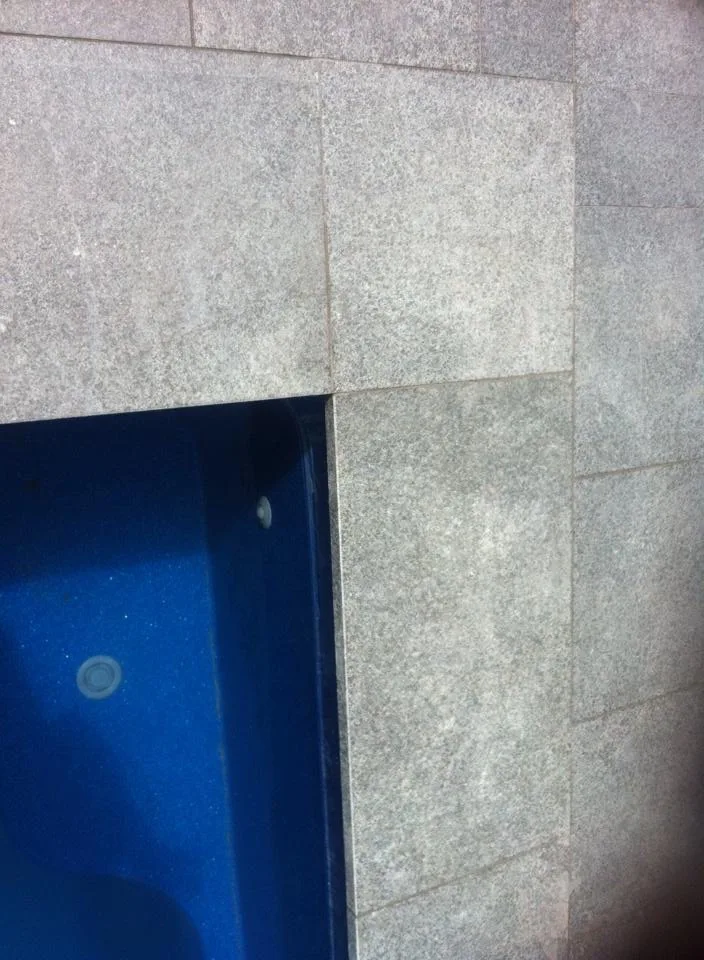
Granite is an igneous rock, formed from cooled magma deep within the earth. It is made up of interlocking crystals of quartz, feldspar and mica, which gives it a speckled, granular appearance and strong overall hardness.
Granite has been a mainstream benchtop material in Australia for decades, valued for its durability, heat resistance and wide availability. See our Stone Benchtops service page for granite fabrication and installation.
What is quartzite?
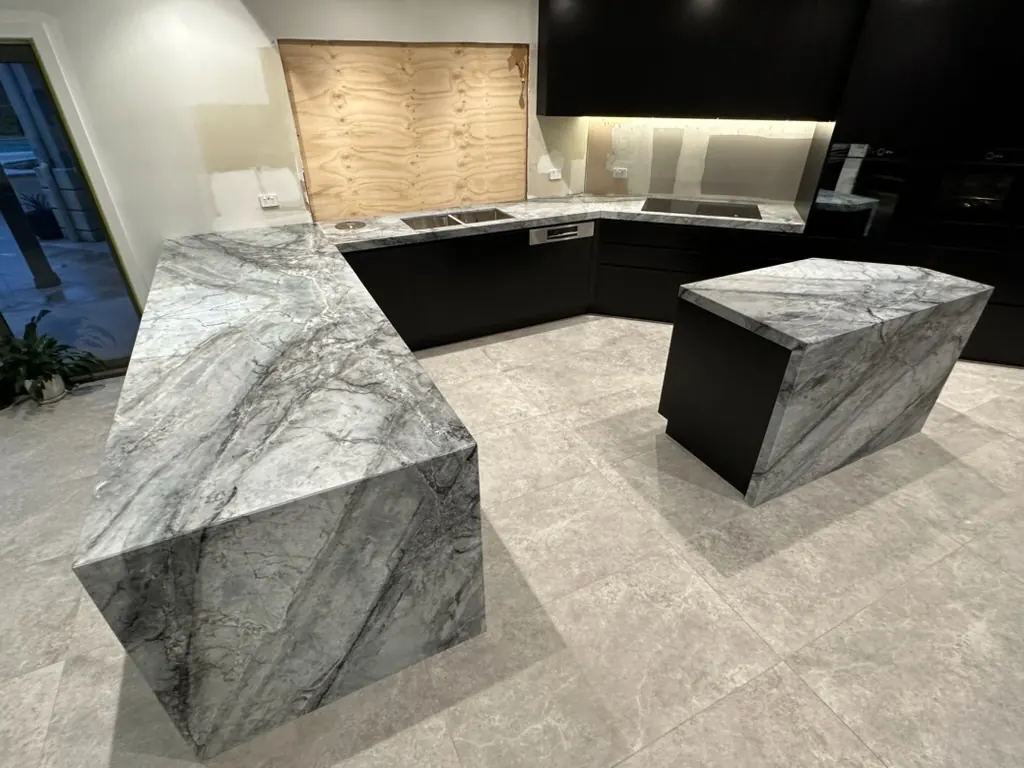
Quartzite is a metamorphic rock. It starts out as sandstone, which is then subjected to intense heat and pressure underground until the sand grains fuse into a dense, hard, crystalline stone. This process is what gives quartzite its exceptional hardness and often its pale, marble-like colouring with subtle veining.
Because true quartzite is rarer and more difficult to quarry and fabricate than granite, it is generally positioned as a premium natural stone option.
Granite vs quartzite at a glance
| Feature | Granite | Quartzite |
|---|---|---|
| Formation | Igneous (cooled magma) | Metamorphic (compressed, heated sandstone) |
| Hardness | Very hard | Typically as hard as or harder than granite |
| Appearance | Speckled, granular, wide colour range | Often marble-like, pale tones with subtle veining |
| Heat resistance | Excellent | Excellent |
| Sealing needed | Usually yes, periodically | Usually yes, though often slightly less porous |
| Availability | Very widely available | Less common; more limited slab range |
| Typical cost | Moderate to premium | Usually premium, often higher than granite |
Pros and cons of granite benchtops
Advantages
- Widely available: a huge range of colours, patterns and slab sizes to choose from.
- Excellent heat resistance: performs very well around hot cookware.
- Strong durability: resists scratching and everyday wear well once sealed.
- Generally more affordable than quartzite for a comparable level of durability.
Disadvantages
- Needs periodic sealing to maintain stain resistance.
- Granular appearance may not suit homeowners chasing a softer, marble-like look.
- Can still chip at edges under heavy impact.
Pros and cons of quartzite benchtops
Advantages
- Exceptional hardness: often more scratch-resistant than granite.
- Marble-like appearance: appeals to homeowners who want that look with more everyday durability than actual marble.
- Excellent heat resistance: handles hot cookware very well.
- Distinctive, premium natural variation.
Disadvantages
- Higher cost: typically more expensive than granite due to rarity and harder fabrication.
- Harder to fabricate: its hardness makes cutting, polishing and edge detailing more demanding, which can add to labour cost.
- Limited slab availability compared to granite's broad range.
- Naming confusion: some products marketed as "quartzite" are not genuine natural quartzite.
How to tell real quartzite from imitations
Because quartzite has become a sought-after premium material, some products are marketed using the name loosely. A few things are worth checking with your supplier before buying:
- Ask whether the product is natural quartzite or a "commercial quartzite," which sometimes refers to a different stone type such as dolomitic marble.
- Ask whether the slab has been treated with resin, dye or a surface coating to enhance colour or reduce porosity.
- Request the geological origin and, where possible, a scratch or acid test comparison, since true quartzite resists both scratching and etching from acids far better than marble.
A reputable stonemason or supplier should be able to answer these questions clearly.
Which is better for heat resistance?
Both granite and quartzite perform excellently around heat, generally better than resin-based engineered surfaces. Neither is fully heatproof, so trivets and heat protection are still recommended for either material.
Which is easier to maintain?
Both stones usually benefit from periodic sealing to protect against staining, though quartzite's density can make it slightly less absorbent than some granites. Neither should be treated as maintenance-free. See our Natural Stone Benchtop Care and Maintenance guide and Kitchen Benchtop Sealers in Australia guide for ongoing care routines.
Which is better for appearance?
This comes down to taste. Granite offers a bold, granular, speckled look with an enormous colour range. Quartzite tends toward paler, more marble-like tones with fine veining, appealing to homeowners chasing that look with tougher everyday performance than actual marble provides.
Which is more affordable?
Granite is generally the more affordable of the two, both in material cost and fabrication labour, since it is more widely quarried and easier to cut and polish. Quartzite's rarity and hardness typically push it toward the premium end of natural stone pricing.
Best choice by priority
| Priority | Better fit | Why |
|---|---|---|
| Budget-conscious natural stone | Granite | Wider availability, generally lower cost |
| Marble look with tougher performance | Quartzite | Pale, veined appearance with excellent hardness |
| Maximum colour choice | Granite | Much broader range of colours and patterns |
| Premium statement kitchen | Quartzite | Rarer, distinctive natural material |
| Heat-heavy cooking areas | Either | Both perform excellently around hot cookware |
When to call a professional
Fabricating and installing granite or quartzite benchtops involves precise cutting, edge detailing, seam placement and sealing, all of which are more demanding with harder stones like quartzite. Getting professional advice up front helps avoid costly mistakes.
TN Stone provides tiling, stonemasonry and benchtop fabrication services across Melbourne and the western suburbs, including Brookfield, Werribee, Caroline Springs, Footscray and surrounding areas.
Common questions
- What are slate, sandstone and quartzite used for?
- What is the best stone for kitchen benchtops?
- What is granite best used for?
Deciding between granite and quartzite for your kitchen? Get a free, no-obligation quote from TN Stone.
Request a Free QuoteFrequently asked questions
Is quartzite harder than granite?
Quartzite is generally as hard as or harder than granite, since it forms when sandstone is compressed and heated deep underground until it becomes extremely dense. Both are very durable, but quartzite is often rated slightly higher on hardness scales.
Is quartzite more expensive than granite?
Often, yes. True quartzite is rarer and harder to quarry and fabricate than granite, which usually makes it a more premium-priced material, though prices vary by slab origin and supplier.
Does quartzite need sealing like granite?
Yes. Both granite and quartzite are natural stones that typically benefit from periodic sealing, although quartzite's density can make it slightly less porous than some granites.
How can I tell if a benchtop is real quartzite?
Some products marketed as quartzite are actually dyed or resin-treated materials, or are quartz-based engineered products rather than natural stone. Ask your supplier for the geological origin and check whether the product is natural quartzite or an engineered look-alike.
Is quartzite better than granite for kitchens?
Both perform very well in kitchens. Quartzite often appeals for its marble-like appearance with strong durability, while granite is typically more affordable and just as capable for everyday use.