Signs You Need Waterproofing Repairs
The most common signs you need waterproofing repairs are water stains or damp patches on walls and ceilings near bathrooms, a persistent musty smell, peeling or bubbling paint close to showers, tiles that feel loose or sound hollow when tapped, and visible cracks in grout or silicone in wet areas. If you notice any of these, get a professional assessment before water gets further into the substrate, framing, or the room below.
Key takeaways
- Ceiling staining, musty smells, bubbling paint and hollow-sounding tiles are usually the earliest, easiest-to-spot warning signs.
- Leaks don't always show up in the room where the problem started — check the space below and beside a wet area too.
- A single cracked silicone joint may be a local repair; widespread damage or loose tiles across a wider area usually means full re-waterproofing.
- Left alone, a waterproofing failure can lead to timber rot, corroding fixings and mould spreading into wall cavities.
Why waterproofing fails over time
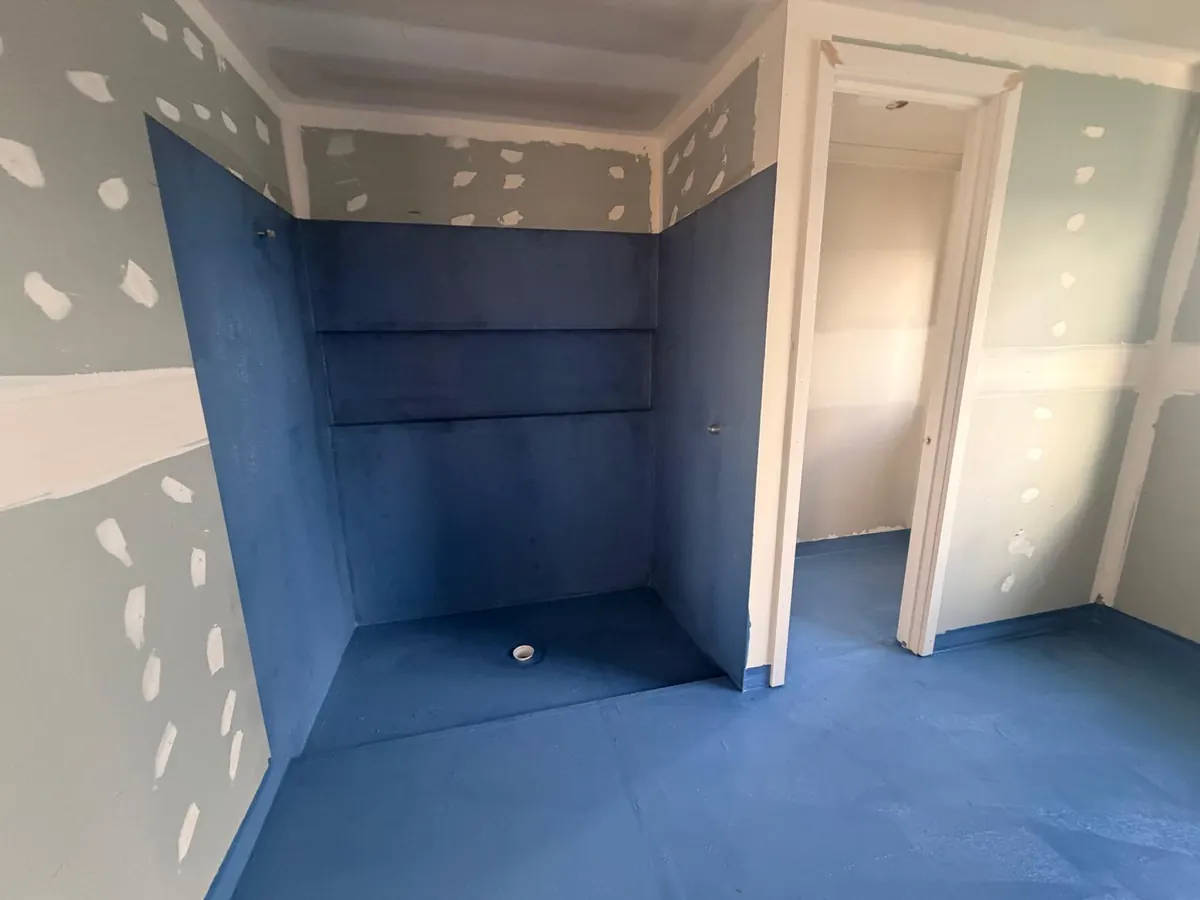
Waterproofing membranes sit hidden under your tiles, doing their job silently for years, until movement, age, or a small gap lets water through. Once that happens, the leak is usually well underway before it becomes visible on the surface, which is why by the time you spot a sign, it's worth acting quickly rather than waiting to "see if it gets worse."
The first signs many homeowners notice
- Water stains, yellowing, or damp patches on a ceiling or wall below or beside a bathroom
- A musty or mouldy smell that doesn't go away with cleaning
- Paint or plaster bubbling, cracking, or peeling near a shower or bath
- Skirting boards or door frames near wet areas that feel soft or look warped
These are usually the earliest, easiest-to-spot indicators, and they almost always mean water is escaping somewhere it shouldn't.
Warning signs inside the bathroom or wet area
- Grout that's cracked, crumbling, or missing in patches, especially in the shower base or corners
- Silicone that's gone mouldy, shrunk, or separated from the tile or bath edge
- Tiles that feel loose, move slightly underfoot, or sound hollow when tapped
- Water pooling on the shower floor instead of draining properly
- Persistent mould regrowth in the same spots no matter how often you clean
Any one of these can be the entry point that's letting water past the membrane.
Warning signs outside or below the wet area
- Stains or dampness on a ceiling directly under a bathroom, especially in a downstairs room or garage
- Damp patches on an external wall near a shower or laundry
- Efflorescence, a white, chalky residue, on masonry near wet areas
- On balconies and outdoor wet areas: cracking pavers, gaps at the balcony door threshold, or damp patches on the wall below
Leaks don't always show up in the room where the problem started — check the space below and beside a wet area too.
Can it be a simple repair, or does it need full re-waterproofing?
Not every issue means ripping up the whole floor. A single cracked silicone joint or a small patch of failed grout can sometimes be repaired locally, provided the membrane underneath is still largely intact. But if water has been getting in for a while, if there's damage in multiple spots, or if tiles have come loose across a wider area, a full or partial re-waterproofing job is usually the only way to actually fix the problem rather than patch the symptom. Our guide on when to regrout vs retile a bathroom covers a similar decision for grout-only issues, and the same logic applies here — the extent of the damage decides the scope of the fix.
What happens if it's ignored
Left alone, a waterproofing failure doesn't stay small. Water tracks along floor joists and wall framing, which can lead to timber rot, corroding metal fixings, mould spreading into wall cavities, and, in older buildings, damage that's far more expensive to fix than the original leak would have been. Catching it early is almost always cheaper than catching it late.
When to call a professional
Call a professional if you notice any staining, smell, or movement in tiles described above, if a previous repair hasn't stopped the problem, or if you're planning a bathroom renovation and want the waterproofing checked before new tiles go down. A proper inspection can confirm whether the membrane has failed, where, and how much of the area needs to be redone, rather than guessing from the visible symptoms alone.
TN Stone provides waterproofing services across Melbourne and can assess whether you need a targeted repair or full re-waterproofing.
Spotted any of these warning signs? Get a free, no-obligation quote from TN Stone before a small leak turns into a much bigger job.
Request a Free QuoteFrequently asked questions
Can I fix a waterproofing leak without removing tiles?
Sometimes — if the issue is limited to a joint, corner, or section of silicone or grout and the membrane below is otherwise sound, a targeted repair may be possible. Widespread or long-standing leaks usually need tiles removed to access and replace the membrane properly.
How do I know if it's just condensation, not a waterproofing leak?
Condensation tends to appear evenly across cooler surfaces, like windows or tiles, and clears up with better ventilation. A waterproofing leak usually shows up as a localised stain, is linked to shower or bath use, and doesn't improve with airflow alone.
Does regrouting or resealing fix a waterproofing problem?
It can, if the failure is only at the surface joints. But regrouting and resealing address the grout and silicone, not the membrane underneath, so if water has already gotten past those joints and into the substrate, the membrane itself may also need attention.
How long does re-waterproofing a bathroom usually take?
For a standard bathroom, re-waterproofing and retiling typically takes several days to a week or more, depending on the extent of the damage and whether other trades such as plumbing or electrical need to be involved.
Is it normal for older Melbourne homes to have waterproofing issues?
Yes — many older homes were built before current waterproofing standards, or have membranes well past their intended lifespan. It's one of the more common issues we see in period homes and renovations across Melbourne.