How to Clean Outdoor Paving and Stone Surfaces in Australia
Outdoor paving, natural stone and tiled surfaces take a beating from weather, foot traffic and garden run-off. Moss, algae, dirt and staining not only look untidy, they can make paths, steps and pool surrounds slippery. In this guide, we explain how to clean outdoor surfaces safely, when to use soft washing versus pressure washing, and the mistakes that can damage paving or strip a sealer.
Key takeaways
- Soft washing suits delicate, honed or sealed surfaces; pressure washing suits durable, unsealed hard paving.
- The right method depends on the material — bluestone, granite, sandstone, limestone, travertine, concrete and porcelain paving don't all clean the same way.
- Acidic or highly alkaline cleaners can etch or discolour many natural stones; a pH-neutral cleaner is the safer default.
- Regular cleaning improves slip resistance and helps sealed surfaces and grout last longer between deep cleans.
Why outdoor surfaces get dirty
Outdoor paving is constantly exposed to the elements, which means it collects grime in ways indoor surfaces never do:
- Moss and algae in shaded, damp or poorly drained areas
- Wind-blown dirt, dust and organic debris such as leaves and pollen
- Efflorescence, a white mineral bloom that can appear on concrete and some stone pavers
- Oil, rubber and tyre marks on driveways and parking areas
- Black lichen or mould growing in the gaps between pavers, especially in shaded courtyards
- UV fading and general weathering over time
Left untreated, this build-up doesn't just look unattractive — moss and algae in particular can make paths, steps and pool surrounds noticeably more slippery.
Soft washing vs pressure washing
These two methods are not interchangeable, and using the wrong one can damage a surface or strip a sealer.
Soft washing
Soft washing uses lower pressure, often combined with a cleaning solution, to lift dirt, moss and algae without physically eroding the surface. It's the safer choice for:
- Honed, polished or tumbled natural stone
- Sealed pavers and tiles
- Rendered walls, façades and delicate architectural finishes
- Older or more worn paving where high pressure could dislodge jointing sand or damage the surface
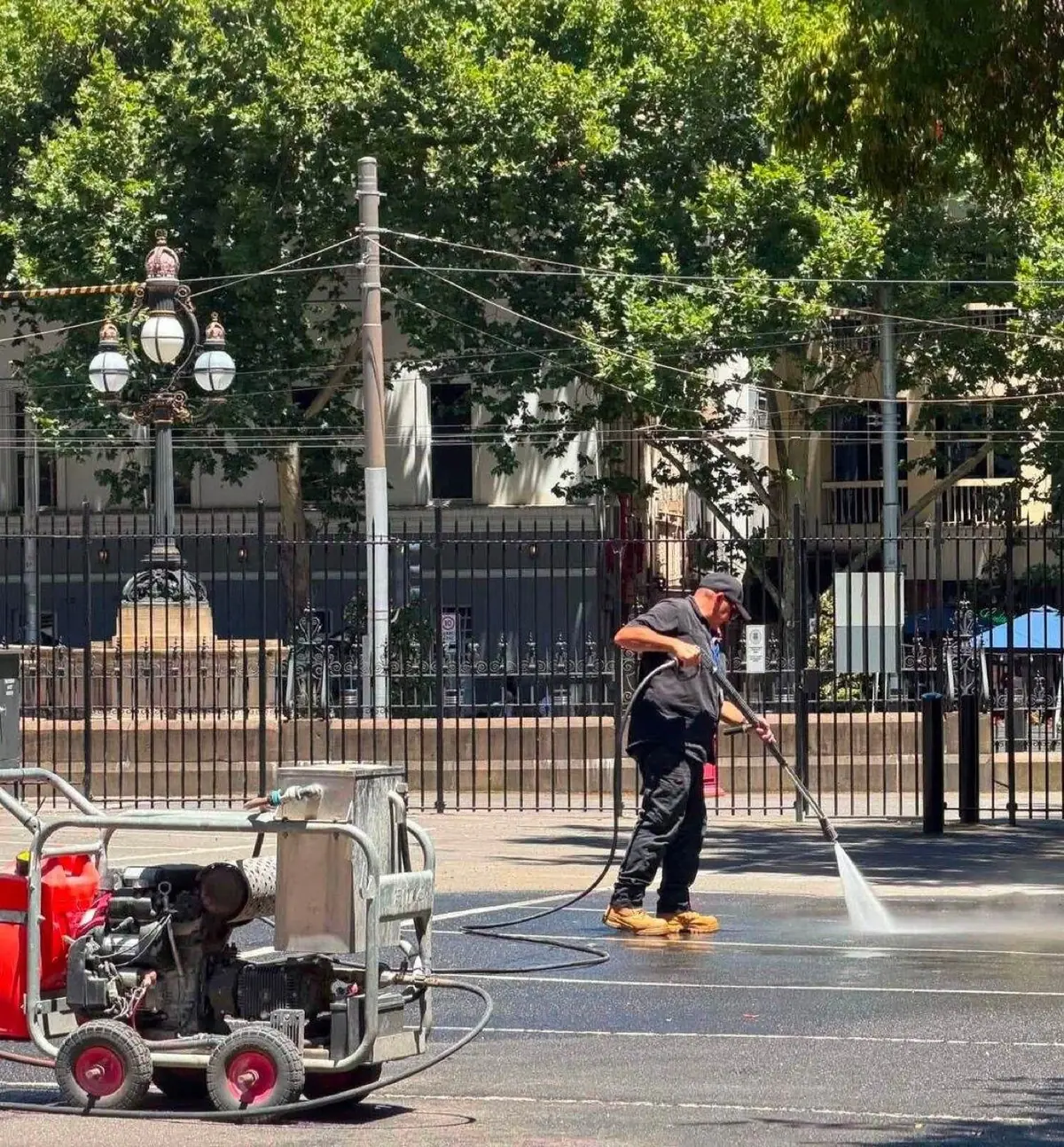
Pressure washing
Pressure washing uses controlled high pressure and is generally suited to tougher, more durable surfaces such as:
- Dense, unsealed concrete and exposed aggregate
- Durable stone such as bluestone in good condition
- Heavily soiled driveways, paths and parking areas
Even on suitable surfaces, pressure needs to be matched to the material and applied evenly — too much pressure in one spot, held too long, can etch stone, strip sealer or blow out jointing sand between pavers.
Cleaning different paving materials
Bluestone and granite
Durable, popular choices for Melbourne paving. Both generally tolerate moderate pressure washing on the stone itself, but sealed bluestone should be cleaned more gently to protect the sealer, and pressure should be kept away from the joints on either material.
Sandstone and limestone
Softer and more porous than bluestone or granite. Sandstone and limestone are more prone to staining, etching and surface erosion, so a soft wash approach with a pH-neutral cleaner and a soft-bristle broom for stubborn spots is usually the safer option.
Travertine
Travertine's natural pitting can trap dirt and grime. A gentle clean with the right product helps avoid widening pits or dulling a honed or polished finish.
Concrete pavers
Generally hard-wearing and tolerant of pressure washing, though older or weaker pavers can be damaged by excessive pressure at close range.
Porcelain paving
Porcelain is dense and low-porosity, making it one of the easier outdoor surfaces to clean. It generally handles pressure washing well, though grout joints between porcelain pavers still need a suitable approach to avoid erosion.
A simple outdoor cleaning process
1. Inspect the surface
Identify the material, finish (honed, polished, textured), whether it's sealed, and the type and extent of staining or build-up.
2. Clear the area
Remove furniture, pot plants, mats and loose debris, and protect garden beds and nearby plants from run-off where needed.
3. Choose the right method and product
Select soft washing or pressure washing based on the material, and use a cleaner suited to the surface — avoid bleach, strong acids or highly alkaline products on natural stone unless a professional has confirmed they're appropriate.
4. Clean methodically
Work in manageable sections, keeping the pressure and distance consistent to avoid uneven cleaning patterns or "striping."
5. Rinse thoroughly
Rinse away all cleaning product residue, which can otherwise attract dirt more quickly if left behind.
6. Check drainage and finish
Make sure water is draining away from the home and not pooling, and assess whether the surface needs resealing once fully dry. A simple test: if water no longer beads on the surface and instead soaks straight in, that's a sign the sealer has worn down and needs renewing.
Common mistakes to avoid
- Using too much pressure at close range: can etch stone, strip sealer or blast out jointing sand between pavers.
- Holding a narrow, high-pressure nozzle too close to the surface: can leave permanent lines or "zebra striping" that won't come out with further cleaning.
- Skipping a test patch: always try a new cleaner or pressure setting on a small, hidden area first, especially on natural stone.
- Using acidic or bleach-based cleaners on natural stone: can cause permanent etching, discolouration or efflorescence.
- Not rinsing thoroughly: leftover cleaning product residue can attract dirt faster afterwards.
- Cleaning sealed paving with high pressure: can prematurely wear down the sealer, leaving the surface exposed.
- Ignoring drainage: cleaning without checking falls and drainage can push water back towards the house.
- Assuming every surface cleans the same way: bluestone, granite, sandstone, limestone, travertine, concrete and porcelain all respond differently to pressure and chemicals.
Maintaining slip resistance
Moss and algae are a leading cause of slippery paths, steps and pool surrounds. Regular cleaning — before build-up becomes heavy — is one of the simplest ways to maintain safer outdoor areas, particularly around pools, entries and step edges. If a surface remains slippery even after cleaning, this may point to the paving's natural finish rather than dirt, in which case a professional can advise on suitable options.
When to call a professional
Consider calling a professional cleaner if:
- You have a large driveway, courtyard or commercial area to clean.
- The paving is natural stone, sealed, or an unfamiliar material.
- Previous cleaning attempts have caused staining, etching or uneven results.
- You're unsure whether the surface needs resealing after cleaning.
TN Stone provides soft washing and pressure washing for outdoor paving, natural stone and tiled surfaces across Melbourne and the western suburbs, including Brookfield, Werribee, Footscray and surrounding areas.
Need outdoor paving, stone or tile cleaned properly? Get a free, no-obligation quote from TN Stone.
Request a Free QuoteFrequently asked questions
Is pressure washing safe for bluestone or sandstone paving?
It can be, provided the pressure and nozzle are matched to the material. Softer or honed stone and any sealed surface generally does better with a soft wash approach, while dense, unsealed paving can usually handle controlled pressure washing.
How often should outdoor paving be cleaned?
Most outdoor paving benefits from a clean once or twice a year, though shaded, damp or high-traffic areas prone to moss and algae may need more frequent attention.
Can I use bleach or acid-based cleaners on natural stone paving?
Generally no. Acidic and highly alkaline products can etch, discolour or damage many natural stones, especially limestone, travertine and marble. A pH-neutral cleaner suited to the stone type is the safer option.
Does cleaning outdoor pavers remove sealer?
Aggressive pressure washing or harsh chemicals can wear down or strip some sealers over time. If your paving is sealed, use a gentler method and check whether resealing is needed after a deep clean.
Will pressure washing fix slippery pavers?
Removing moss, algae and grime build-up can significantly improve slip resistance, but if the paving itself has a naturally smooth or polished finish, cleaning alone may not fully resolve the slip risk.
Will soft washing remove oil stains from my driveway?
It can help lift fresh or light oil stains, but older, set-in oil stains on porous stone or concrete often need a dedicated degreaser or professional treatment rather than a standard soft wash.