Best Materials for Bathrooms in Australia: Tiles, Grout, Stone and Finishes
A good bathroom material choice depends on more than just appearance. In most Australian bathrooms, the best results come from balancing water resistance, slip resistance, durability, cleaning effort and the overall look you want to achieve.
Porcelain is often one of the safest all-round choices for bathroom floors and walls because of its lower water absorption and stronger wear resistance, while natural stone and marble can suit premium bathrooms when sealing and maintenance are planned properly. Grout type, grout colour and the way joints are sealed also play a big role in how the bathroom performs over time.
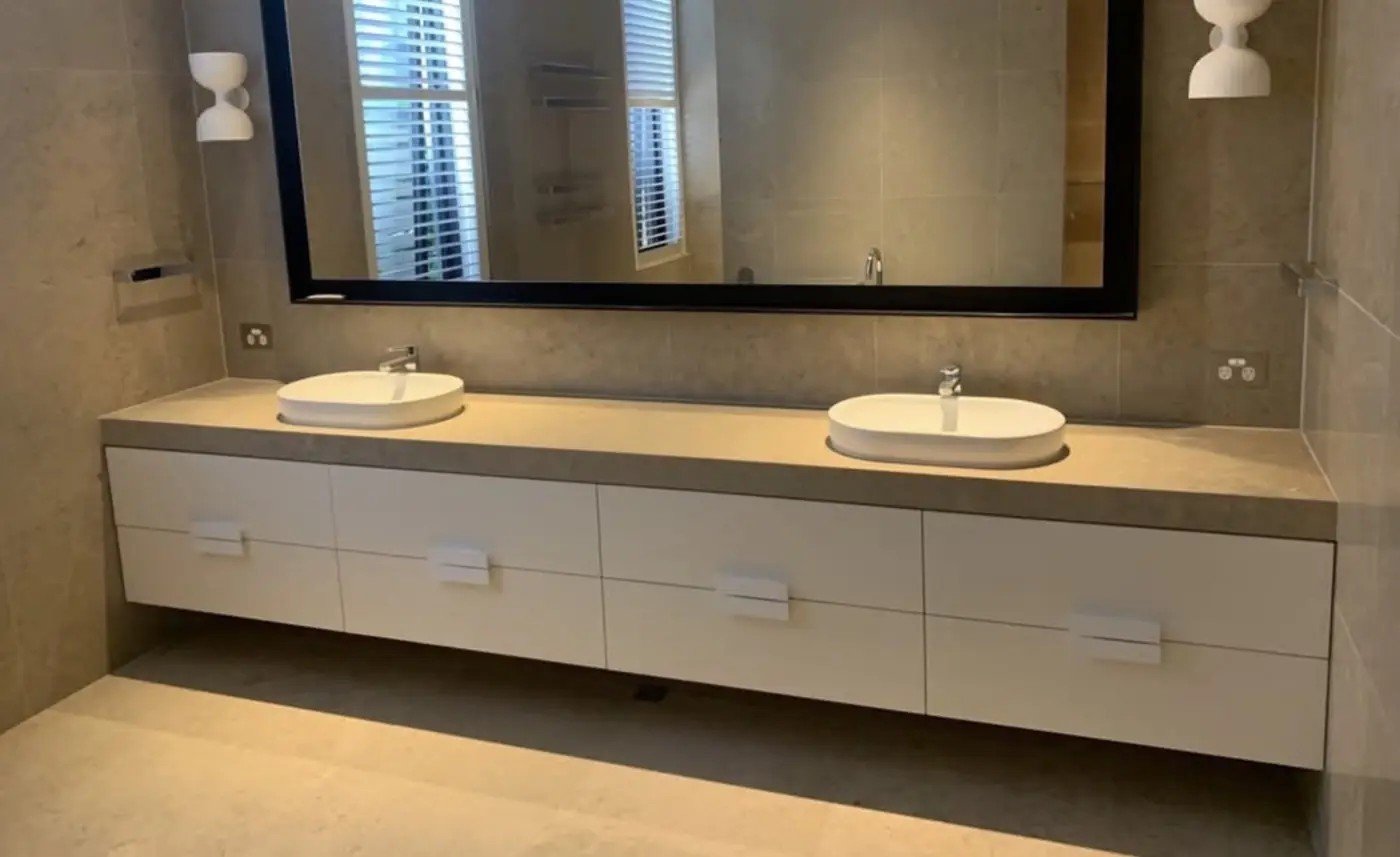
Quick answer
For most Australian bathrooms, porcelain tile is the most practical all-round choice for floors and walls, since it resists water and stains without needing sealing. A mid-tone or darker grout generally hides everyday grime better than very light colours. Marble and natural stone can still have a place as a feature — vanity tops, accent walls or low-splash areas — where their look is worth the extra sealing and care they need.
What matters most when choosing bathroom materials
Bathroom materials get judged on four things at once, and the right choice usually balances all of them rather than maximising just one:
- Water resistance: bathrooms are one of the wettest rooms in the house, so porosity and water absorption matter more here than almost anywhere else.
- Slip resistance: particularly on floors and in showers, where bare feet and constant moisture make grip a genuine safety issue.
- Maintenance: how much ongoing cleaning, sealing or care a material needs to keep performing and looking good.
- Appearance and budget: the look you want for the room, balanced against what you're willing to spend on materials and installation.
Best tile materials for bathroom walls and floors
Porcelain, ceramic and natural stone are the main tile options for Australian bathrooms, and each suits a different mix of budget, look and maintenance tolerance.
- Porcelain is dense, low-porosity and available in slip-resistant finishes, making it a strong all-round choice for both floors and walls, including shower areas.
- Ceramic is more affordable and easier to cut than porcelain, though slightly more porous and a little less durable under heavy wear.
- Natural stone (such as slate, limestone or travertine) offers a premium, unique look but generally needs sealing and more ongoing care than manufactured tile.
For a detailed comparison of floor-specific options including slip ratings, see our related guide, Best Tiles for Bathroom Floors. For how porcelain and ceramic stack up against each other more broadly, see Porcelain vs Ceramic Tiles: What's the Difference in Australia?
Best grout choices for bathrooms and showers
Grout type and colour both affect how a bathroom performs day to day, not just how it looks on installation day.
- Epoxy grout is the most water- and stain-resistant option and needs no sealing, making it a strong choice for showers and high-use bathrooms. See Epoxy vs Cement Grout for a full side-by-side comparison.
- Polymer-modified cement grout is more budget-friendly and works well when properly sealed and paired with good ventilation.
- Urethane grout sits in between, offering good flexibility and water resistance without epoxy's more demanding application.
Grout colour matters too: mid-tone and darker shades tend to hide everyday grime better than very light or white grout, particularly on floors and in showers. For the full breakdown of colour options, see Best Grout Colour for Bathrooms and Kitchens, and for a deeper look at grout performance in wet areas specifically, see Best Grout for Showers in Australia. If you're starting from scratch on grouting basics, our step-by-step guide on How to Grout Tiles in Australia covers the process in full.
Marble, porcelain and natural stone in bathrooms
Marble and other natural stone bring a look that manufactured tile can only approximate, but they come with real maintenance trade-offs. Marble is porous and prone to etching from acidic products, so it needs sealing and more careful product choice than porcelain.
Porcelain, including marble-look ranges, has become popular precisely because it delivers a similar aesthetic with far less upkeep. A common approach is porcelain for the shower walls and floor, with marble or natural stone reserved for a vanity top or feature wall away from constant water exposure. For the full comparison, see Marble vs Porcelain in Bathrooms and our broader guide to Types of Stone and Tile Used in Australia. If natural stone is part of the plan, see Stone Sealers Explained for how sealing and ongoing maintenance work.
Best options for low-maintenance bathrooms
If minimising ongoing care is the priority, the most reliable combination is:
- Porcelain tile on floors and walls, in a matte or textured finish for grip.
- Epoxy or urethane grout, so there's no ongoing sealing schedule to manage.
- A mid-tone or darker grout colour, to reduce how visible everyday grime is between cleans.
This combination does not need sealing at all if cement grout is avoided, and it holds up well in busy, high-use bathrooms. Note that some porcelain finishes are naturally low-porosity enough that sealing adds little benefit — see Do Porcelain Tiles Need Sealing? for the detail on when it's worth it and when it isn't.
Best material combinations by bathroom type
- Family or high-use bathroom: porcelain floor and wall tiles, mid-tone or dark grout, epoxy grout in the shower recess.
- Premium main bathroom or ensuite: porcelain in the shower, natural stone or marble-look porcelain on a feature wall or vanity top, matching grout for a seamless finish.
- Budget-conscious renovation: ceramic or porcelain tile with polymer-modified cement grout and a quality sealer, reviewed periodically.
- Statement or luxury bathroom: genuine marble or natural stone as a feature, paired with porcelain in the wet zone and a proper sealing and maintenance routine from day one.
For a broader look at premium stone options for kitchens and bathrooms alike, see Best Stone Choices for Kitchens and Bathrooms.
When to get professional advice
Material choice is only part of a successful bathroom. Waterproofing, falls to the drain, substrate preparation and correct installation all matter just as much as the tile, grout or stone itself, and getting any of these wrong can undo the benefits of even the best material choice.
TN Stone provides tiling, stonemasonry and waterproofing services across Melbourne and the western suburbs, including Brookfield, Werribee, Caroline Springs, Footscray and surrounding areas. Our bathroom tiling and stone benchtops teams can help match materials to your layout, budget and maintenance expectations before work begins.
Choosing bathroom materials is easier when the room layout, moisture exposure, cleaning expectations and finish level are considered together. TN Stone can help match tiles, grout and stone surfaces to the type of bathroom being renovated or built.
Request a Free QuoteFrequently asked questions
What is the best all-round bathroom tile material?
Porcelain is generally the best all-round choice for most Australian bathrooms. It's low-porosity, doesn't need sealing, comes in slip-resistant finishes, and is available in a huge range of looks, including natural stone-look options.
Is porcelain better than ceramic for bathroom floors?
Porcelain is generally the stronger choice for bathroom floors, with lower water absorption and better wear resistance than ceramic. Ceramic can still work well in lower-stress areas, but porcelain tends to hold up better underfoot in a wet, high-traffic bathroom.
Is marble too high-maintenance for bathrooms?
Marble needs more maintenance than porcelain, including sealing and careful product choice, but it isn't necessarily too high-maintenance for a bathroom. It works well as a feature in lower-splash areas like vanity tops or accent walls, with porcelain often used for the shower itself.
What grout is best for showers and wet areas?
Epoxy grout is generally the strongest option for showers and other wet areas because of its water and stain resistance and lack of ongoing sealing requirements. Polymer-modified cement grout with a good sealer is a common, more budget-friendly alternative.
What grout colour is easiest to keep looking clean?
Mid-tone greys and darker charcoal grout colours generally hide everyday grime and staining better than white or very light grout, particularly on bathroom floors and in showers.
Do natural stone bathroom surfaces need sealing?
Yes, in most cases. Natural stone such as marble, limestone and travertine is generally porous and benefits from sealing and periodic resealing, especially on bathroom floors and other wet-area surfaces.